AZATA Stadium
Year
2025
Location
Yerevan, Armenia
Project type
Sport
Status
Concept
Team
Shamsudin Kerimov, Alexander Zhatov, Alina Denisovich, Diana Kozyreva

Finalist of the design competition for the stadium of the football club Urartu, finalist of the WAF 2025, WAN 2026.
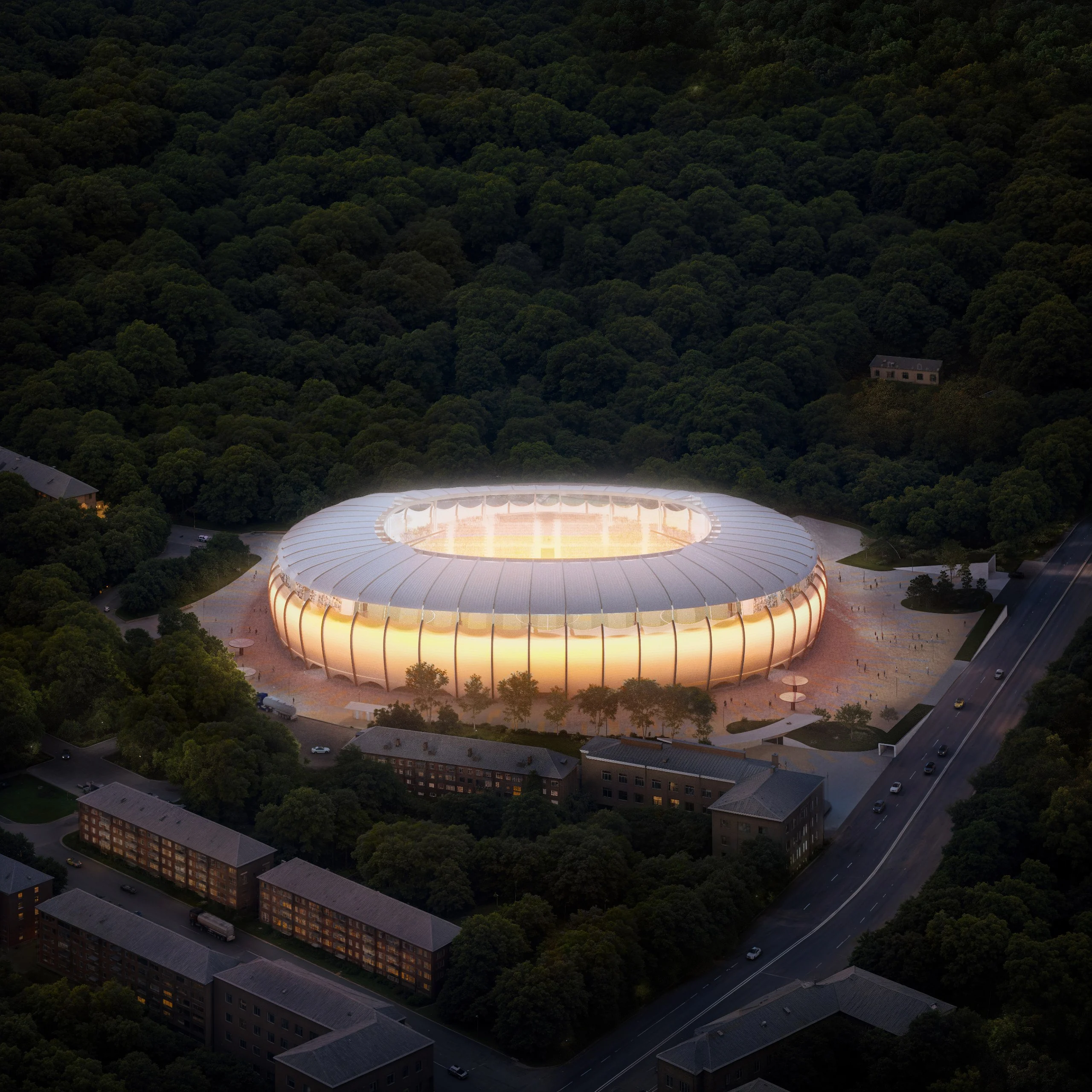
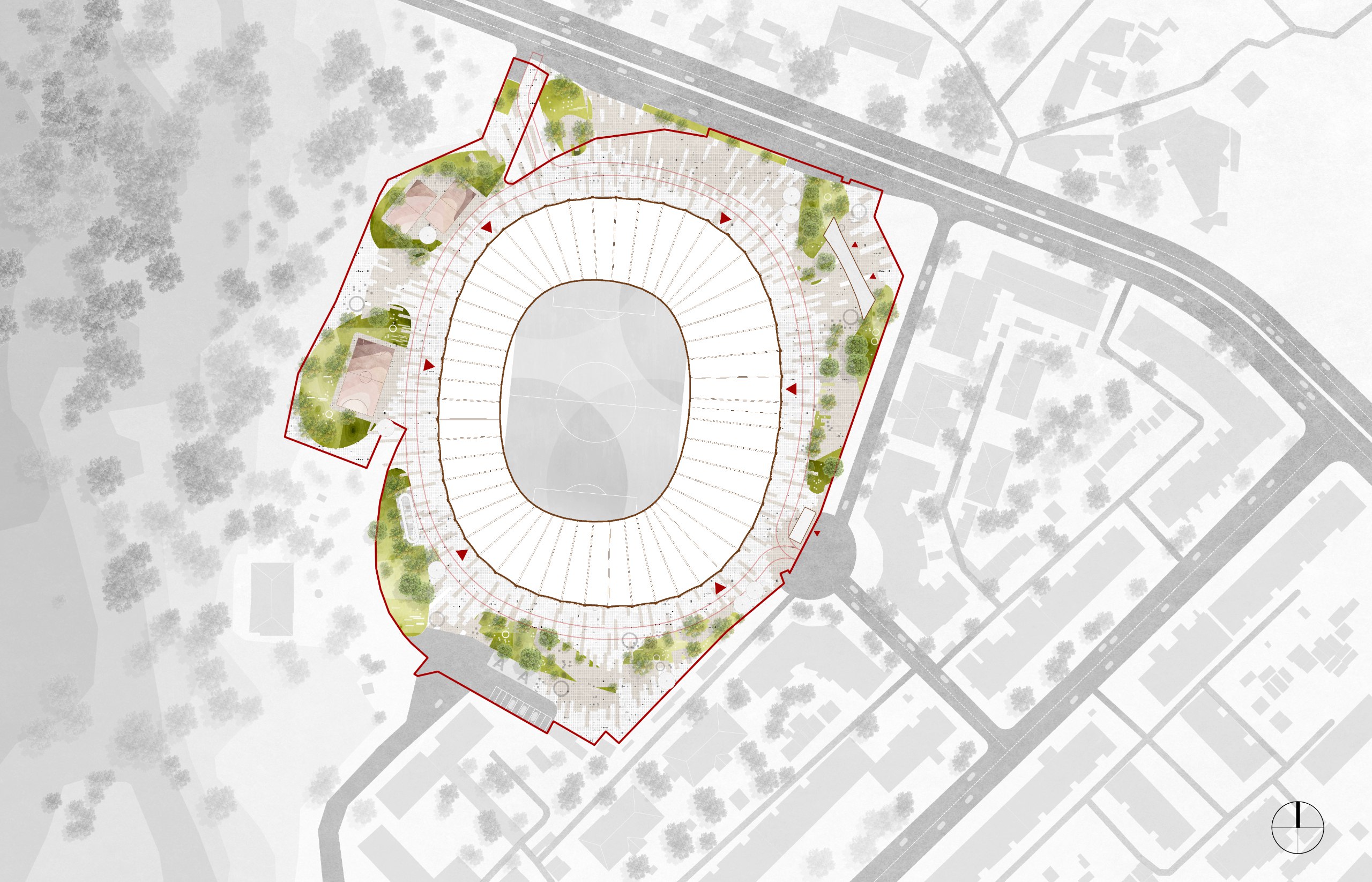
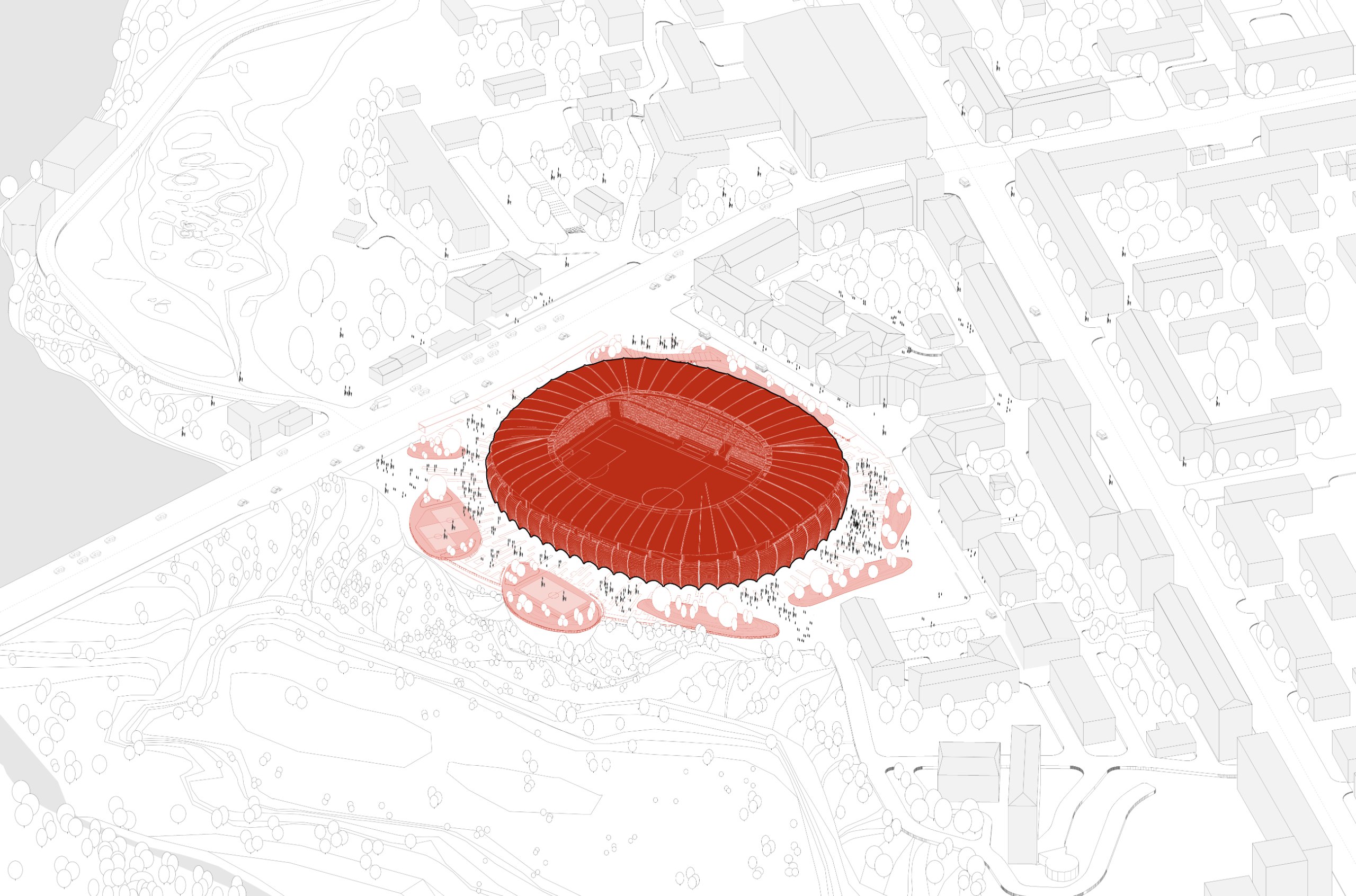
Azata Stadium is a new focal point in Yerevan, created on the site of an old Soviet-era football field that lacked infrastructure and had long become obsolete. The site is located between the Hrazdan River and Yerevan Lake, next to the Shengavit archaeological complex—one of the oldest settlements in the region, dating back to the 4th millennium BCE. This location literally safeguards the city's origins.
Cultural Code of the Project
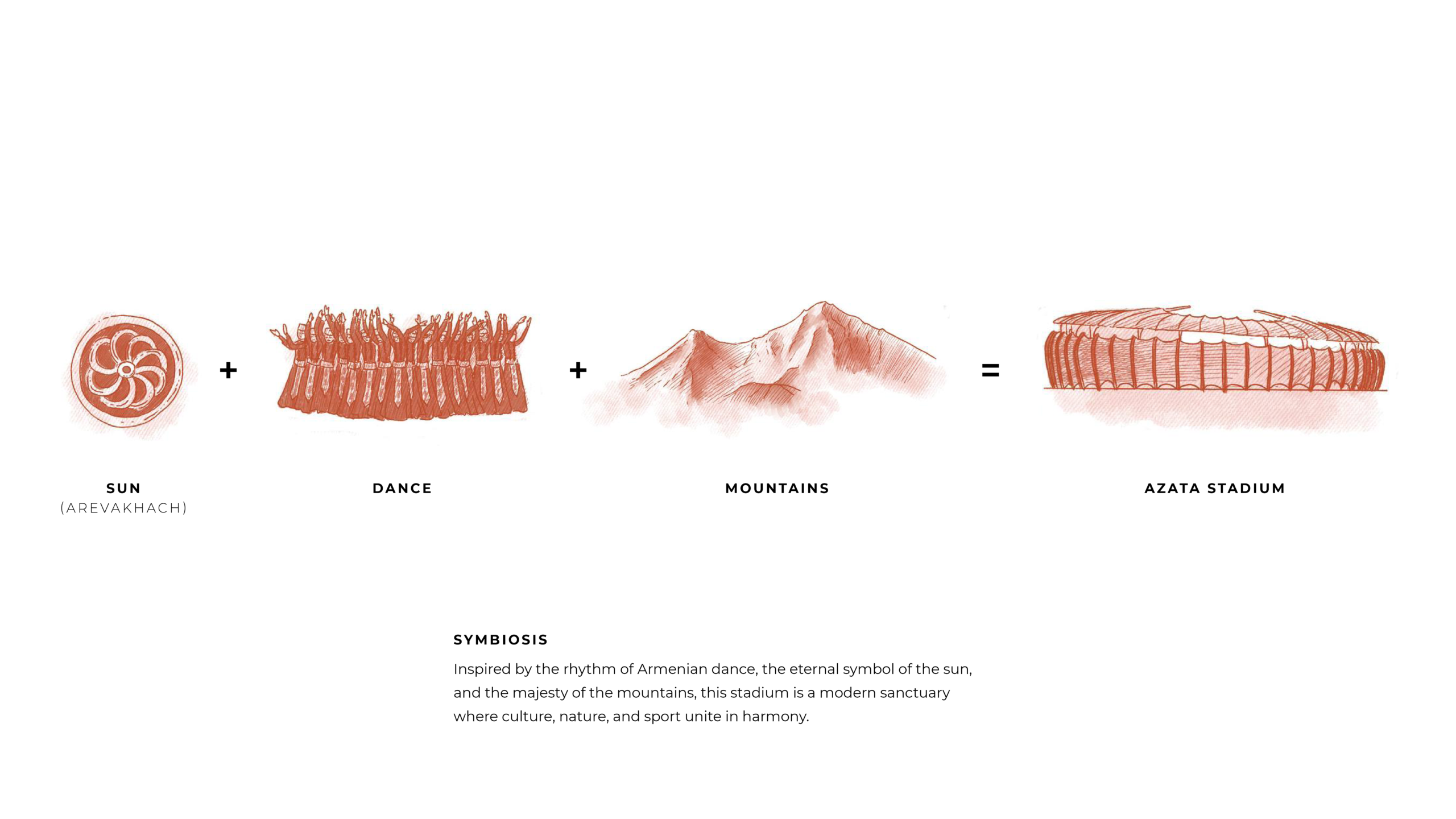
Armenia possesses a remarkably strong identity, and our task was to ensure the architecture not only created modern sports infrastructure but also became a gesture of respect towards cultural archetypes. The project is based on three key symbols: Arevakhach — an ancient solar symbol of eternity; Kochari — a traditional circular dance, a symbol of collective energy and unity; and Ararat — the sacred mountain and one of the most recognizable national images. We combined these motifs into a single architectural form—dynamic, emotional, and deeply rooted in context.
Architectural Concept
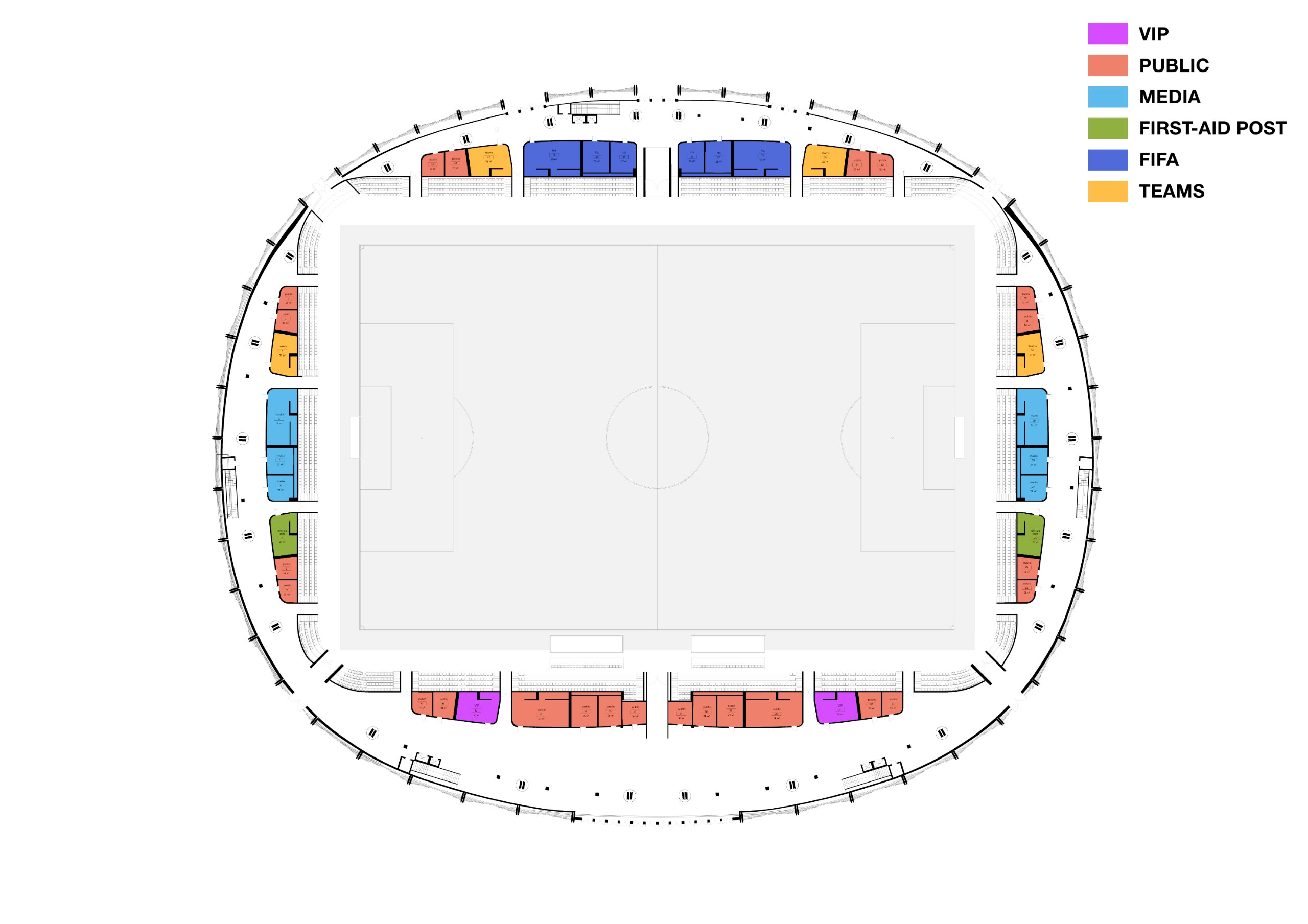
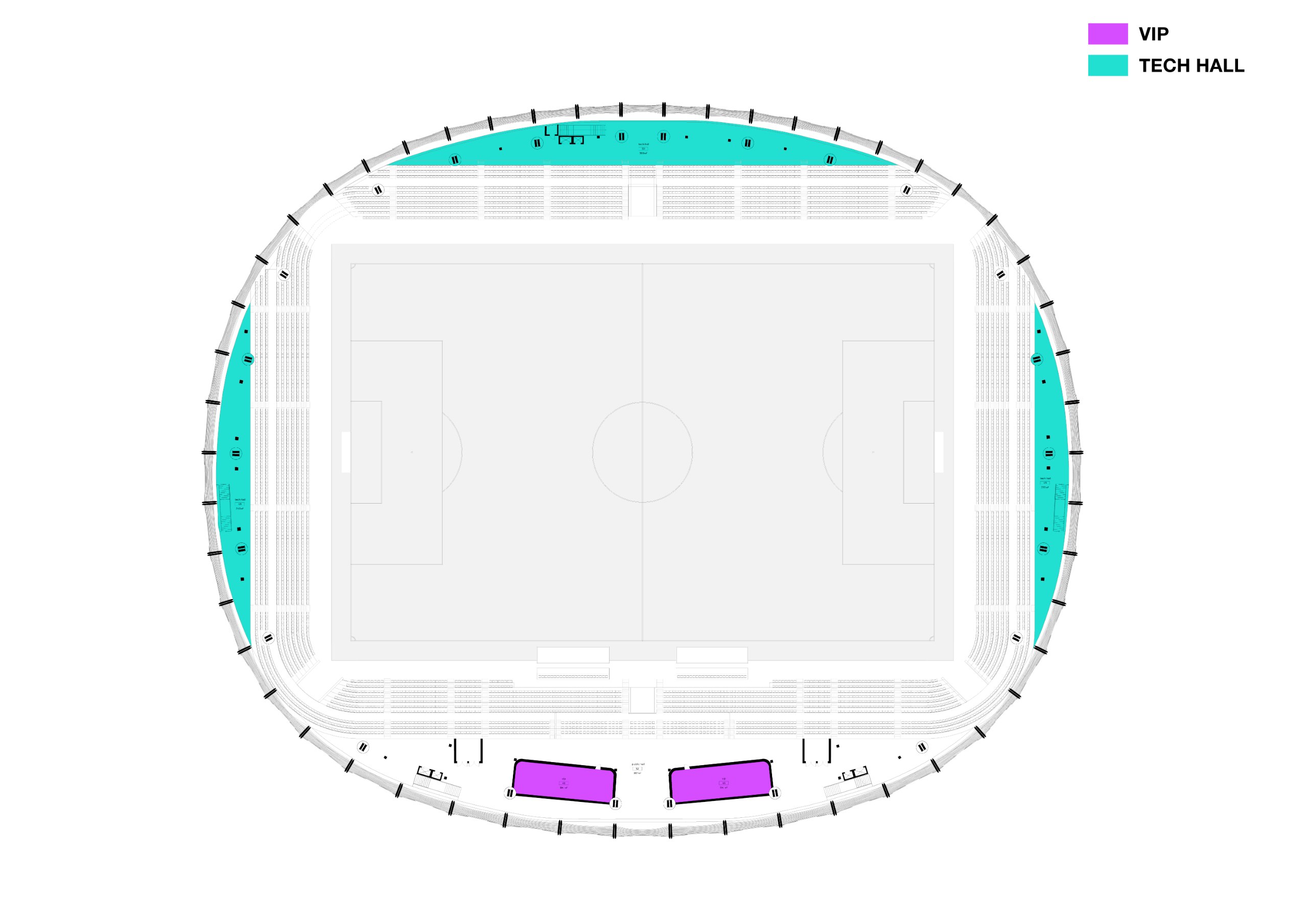
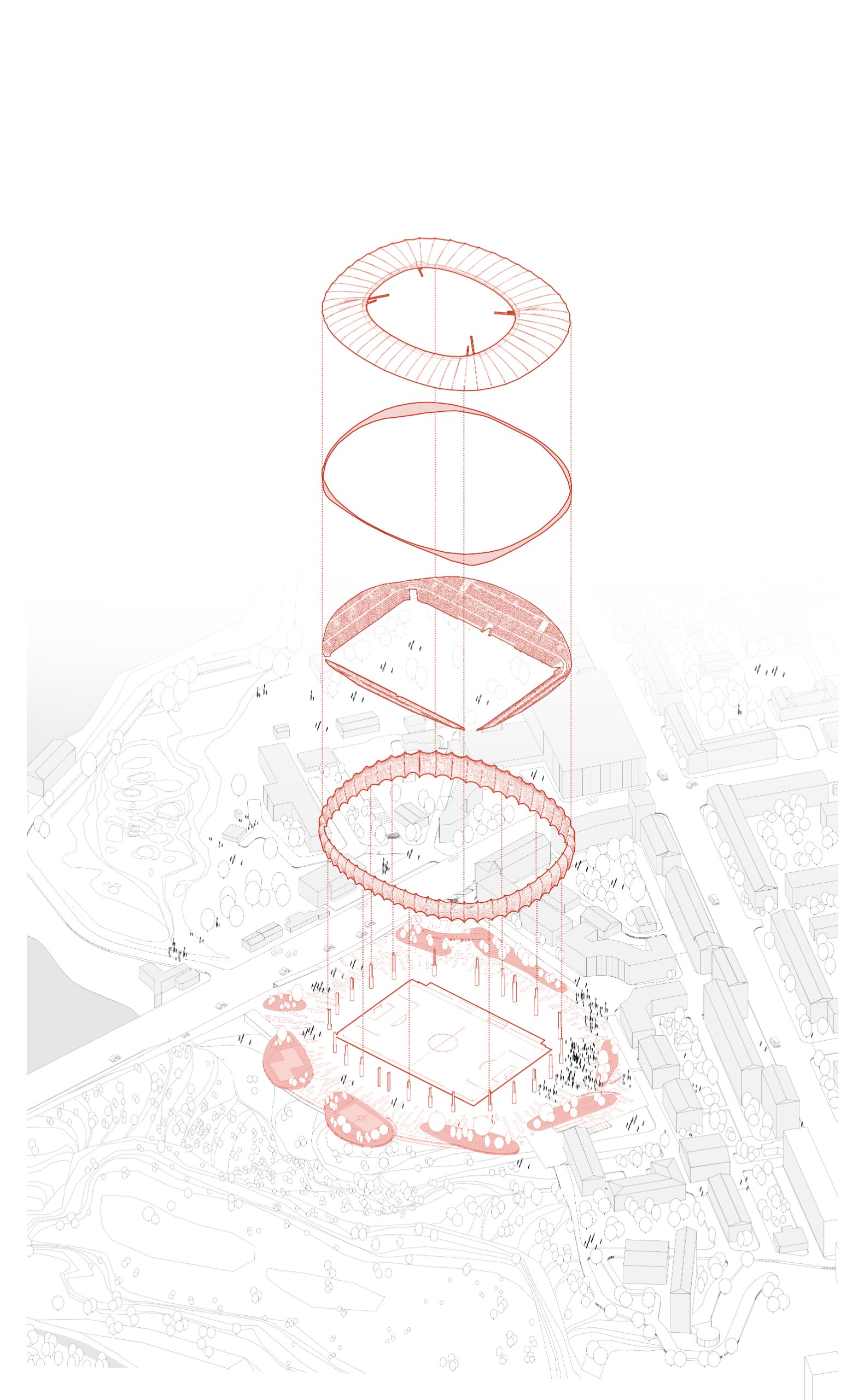
The stadium is shaped as an organic structure where park spaces, the outer shell, stands, the pitch, and the roof exist within a unified system. The main level is an open, continuous space, with all service facilities integrated along the inner perimeter of the stands, creating a clear and logical navigation system.
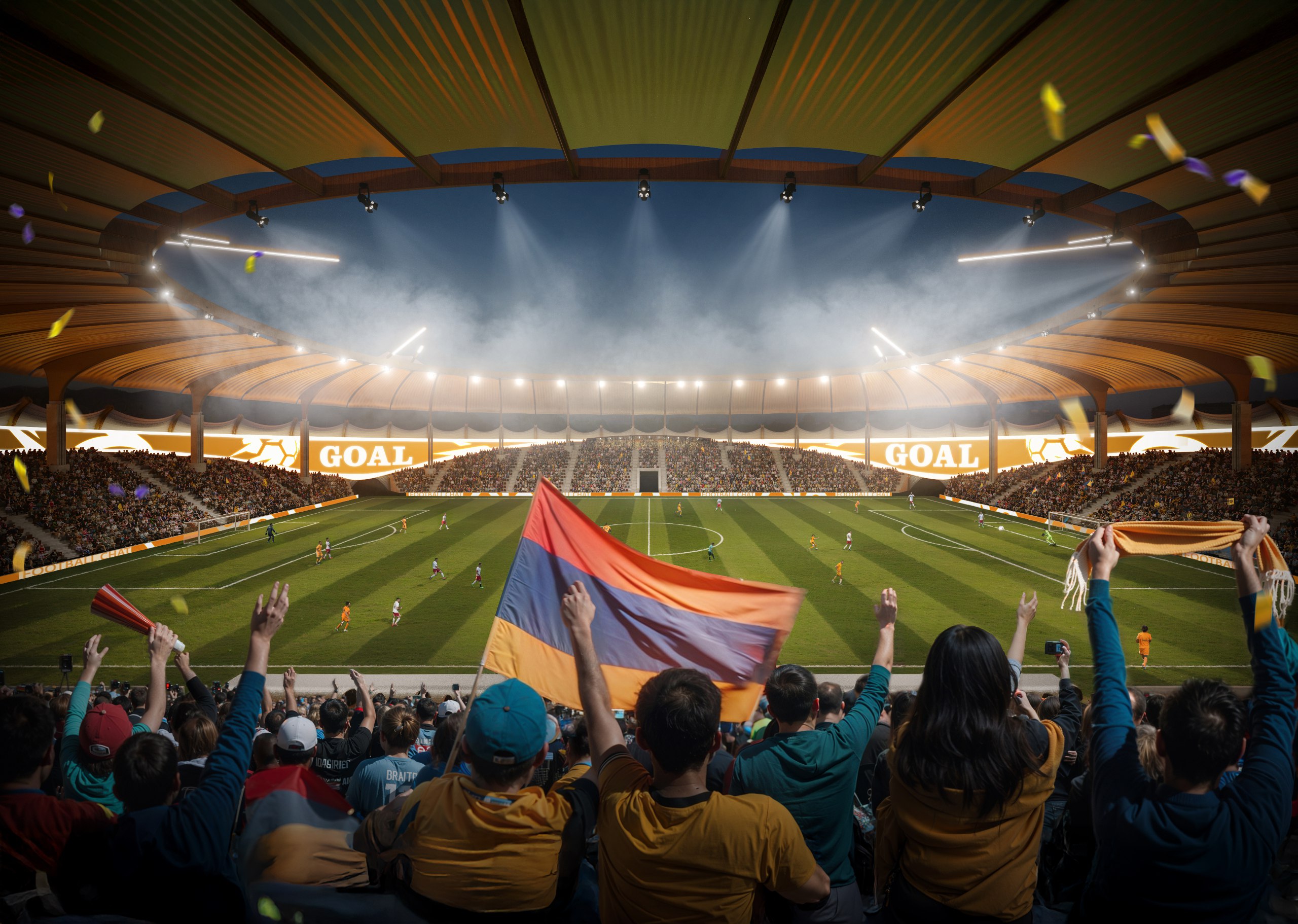
The arena is designed to be multifunctional: it easily adapts to football matches, concerts, padel tournaments, or mass events.
City and Landscape
A public park with walking and sports trails, open-air amphitheaters, basketball courts, and padel courts is created around the stadium. The landscape is based on the spiral geometry of the Arevakhach: each ray transforms into a green "island" for relaxation or activity.
An important part of the sustainability strategy is the reuse of soil: all the earth excavated during construction is returned in the form of terraces, slopes, and retaining walls, shaping a natural topography.
Image and Structure
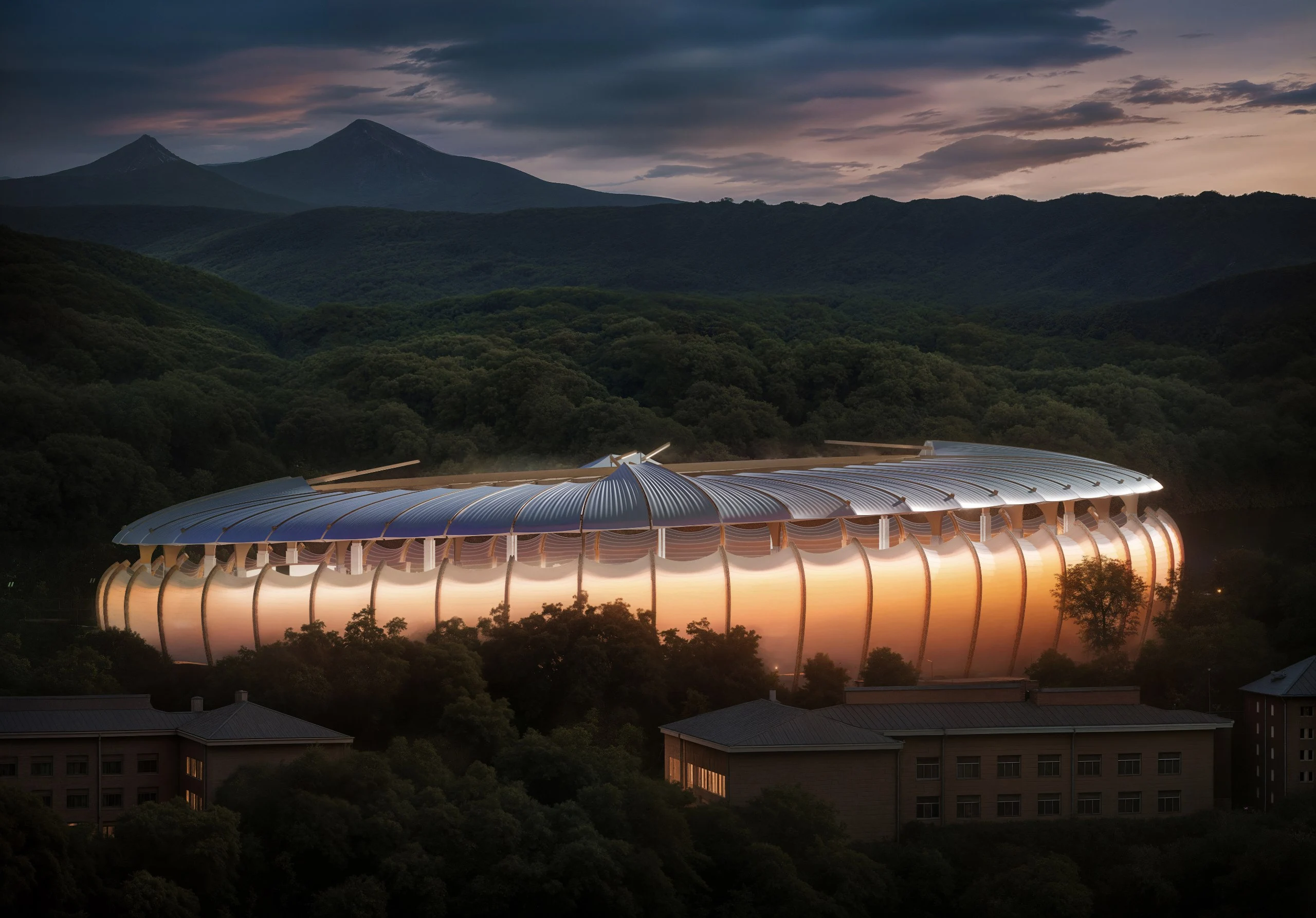
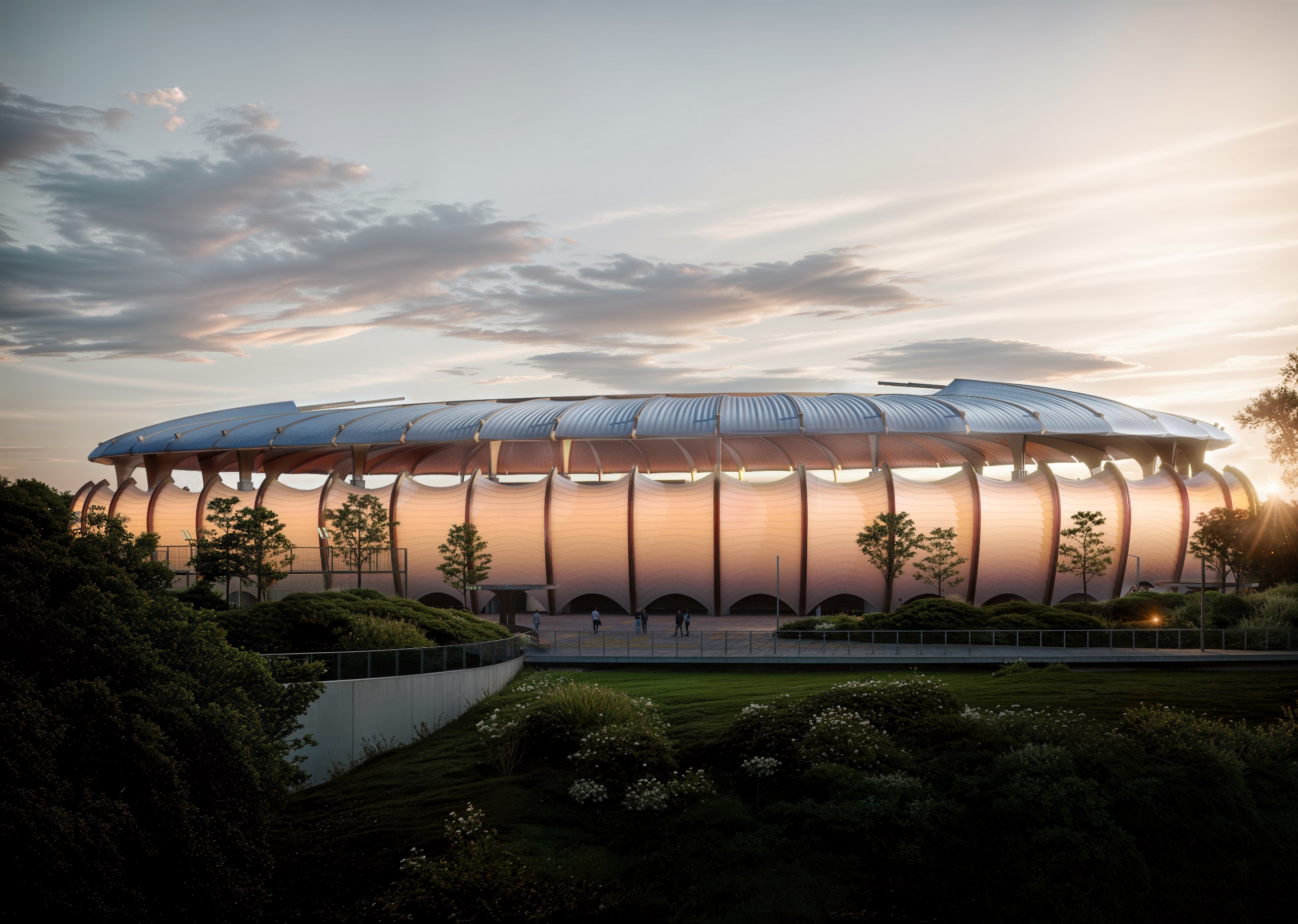
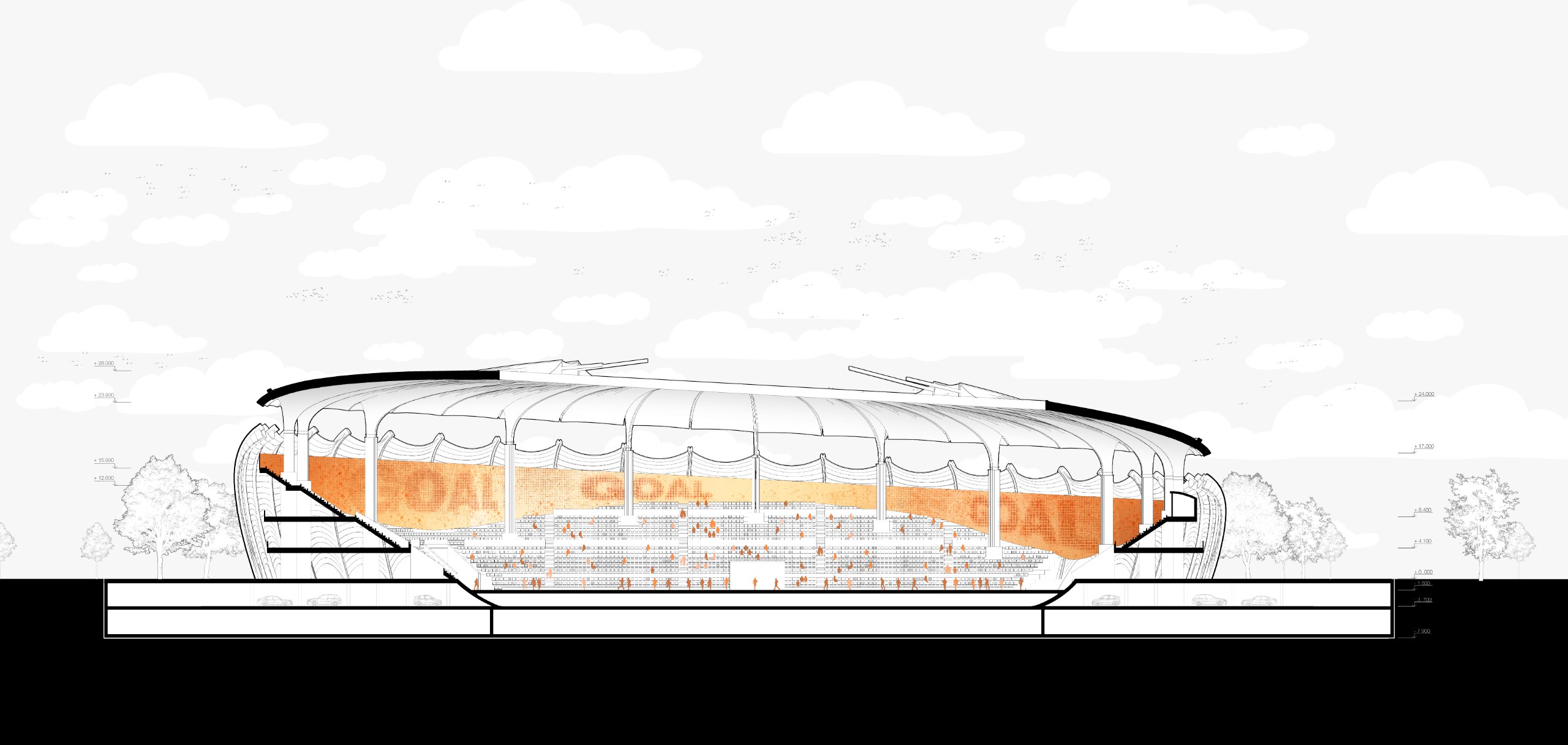
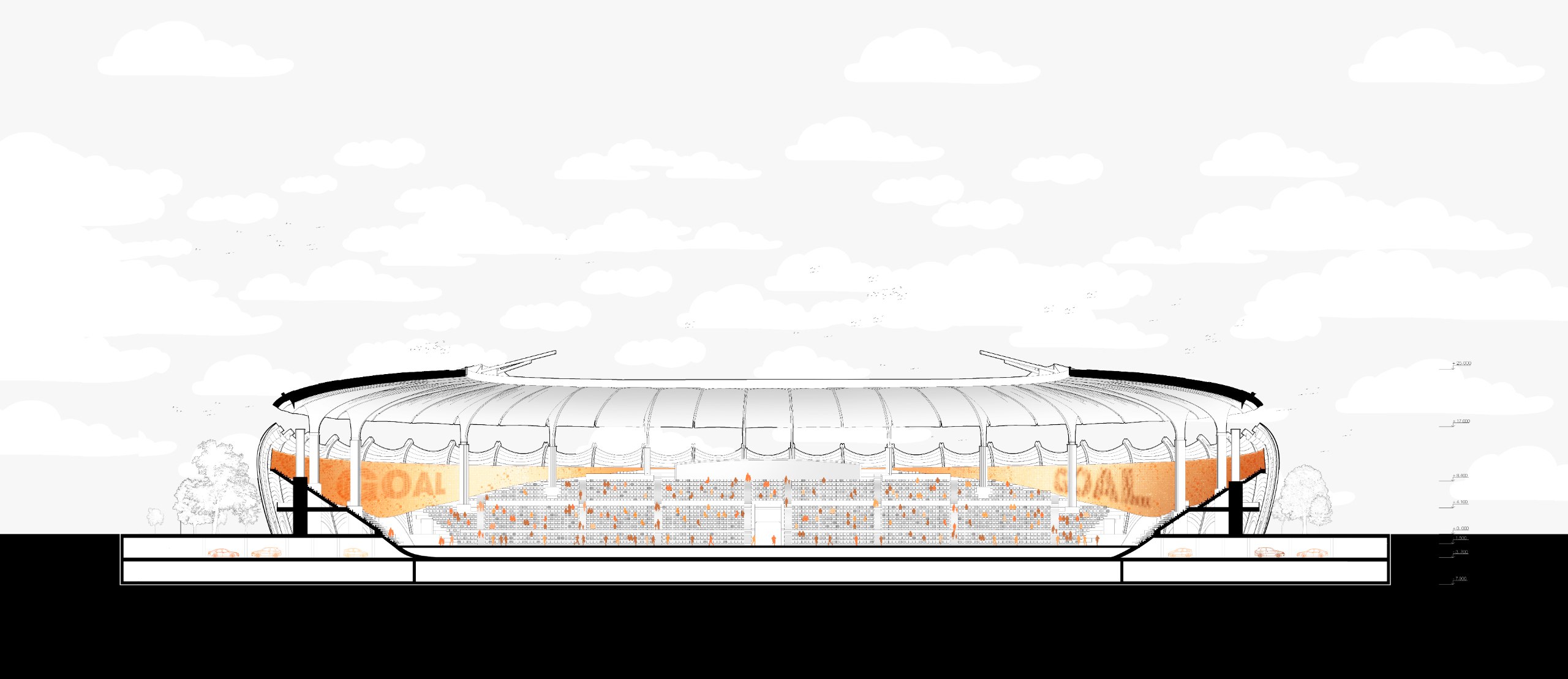
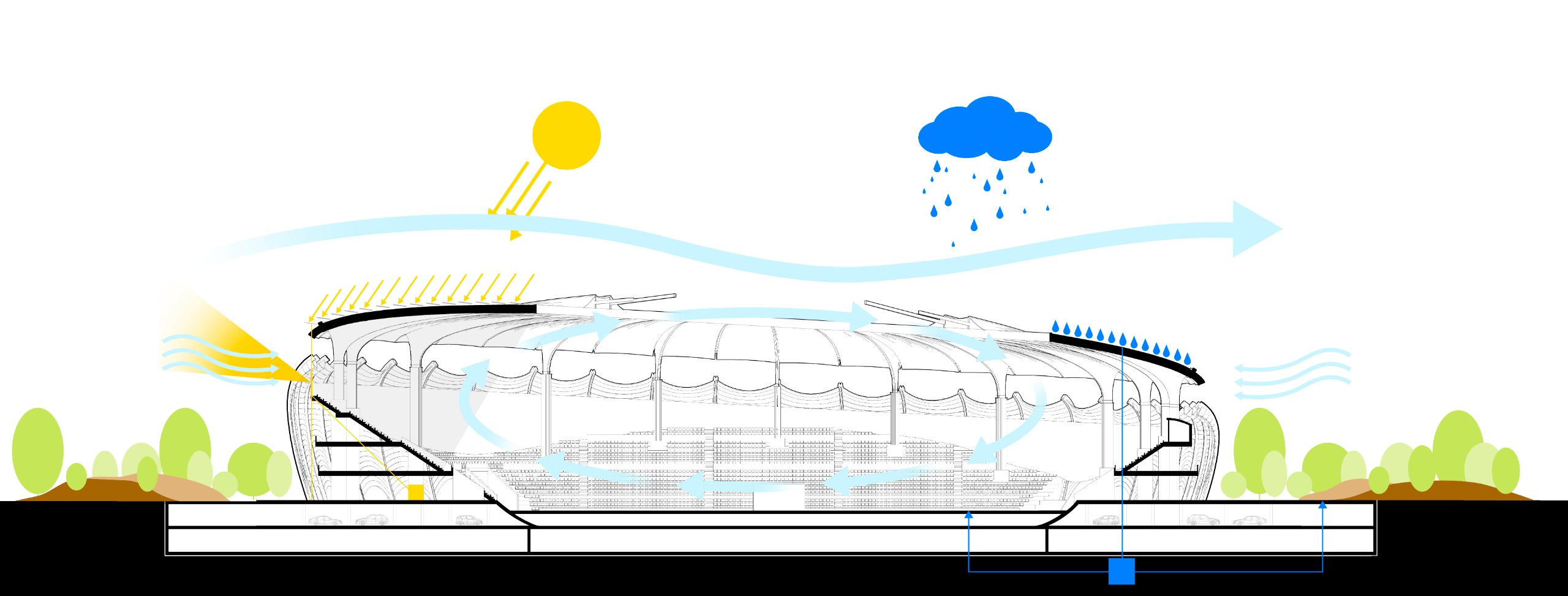
The inclined roof opens toward the city and Mount Ararat—an architectural gesture of respect for Yerevan.
In section, a contrast is created:
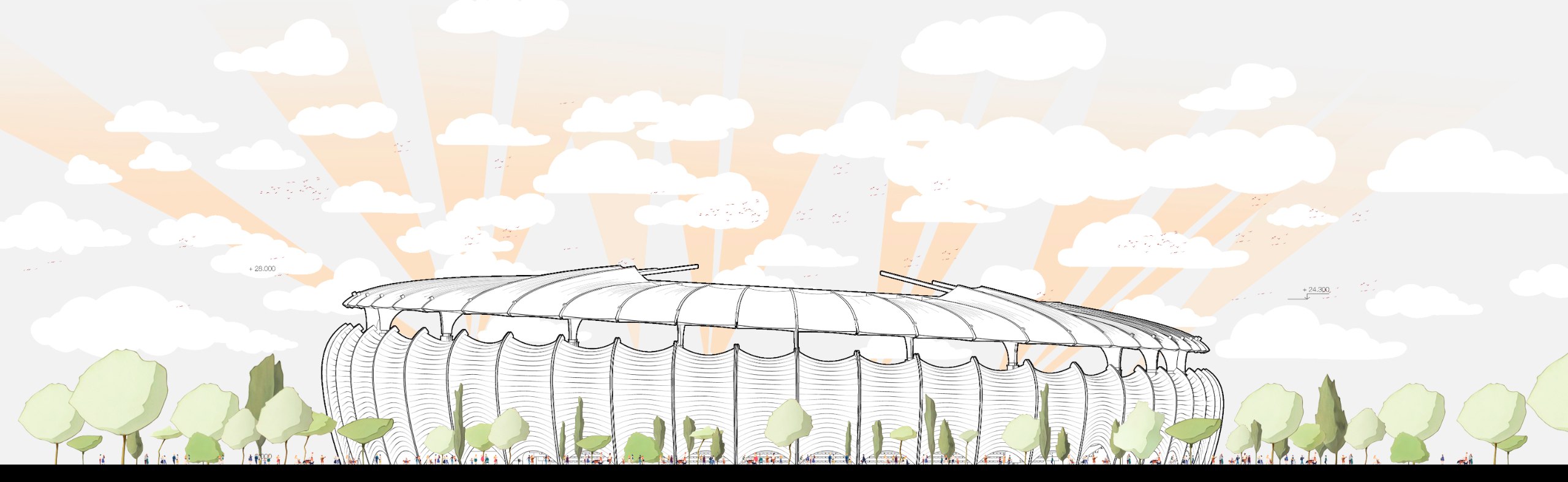
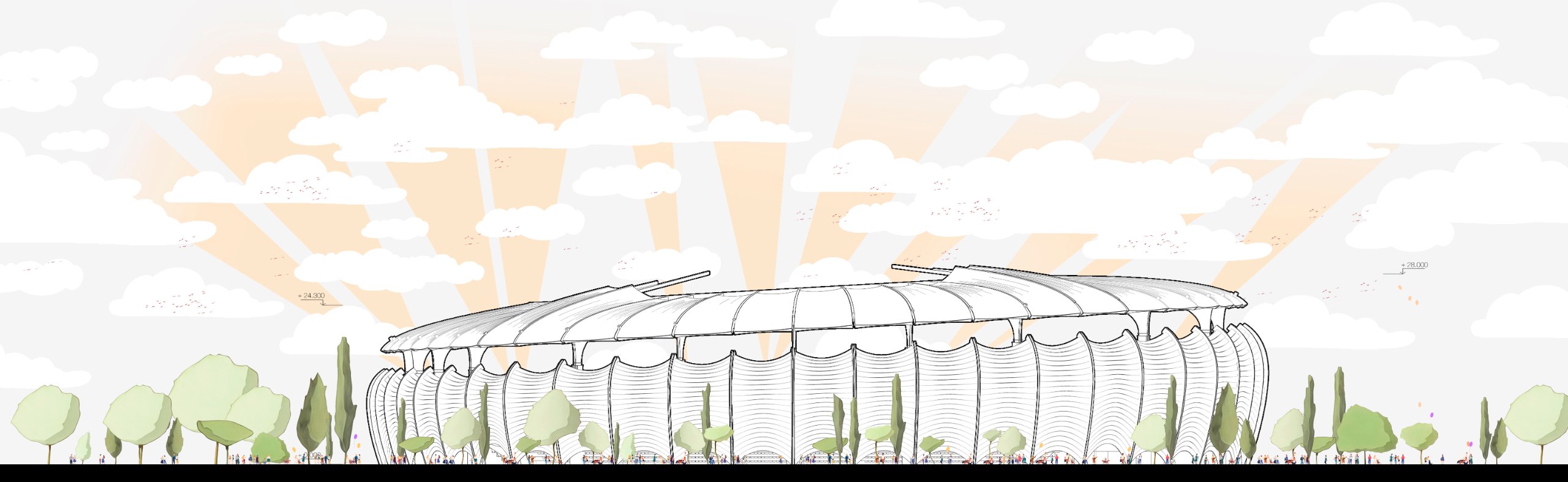
The interior space is bright, festive, and filled with movement. The outer shell is restrained and calm, evoking a sense of tranquility and security.
Sustainability and Engineering
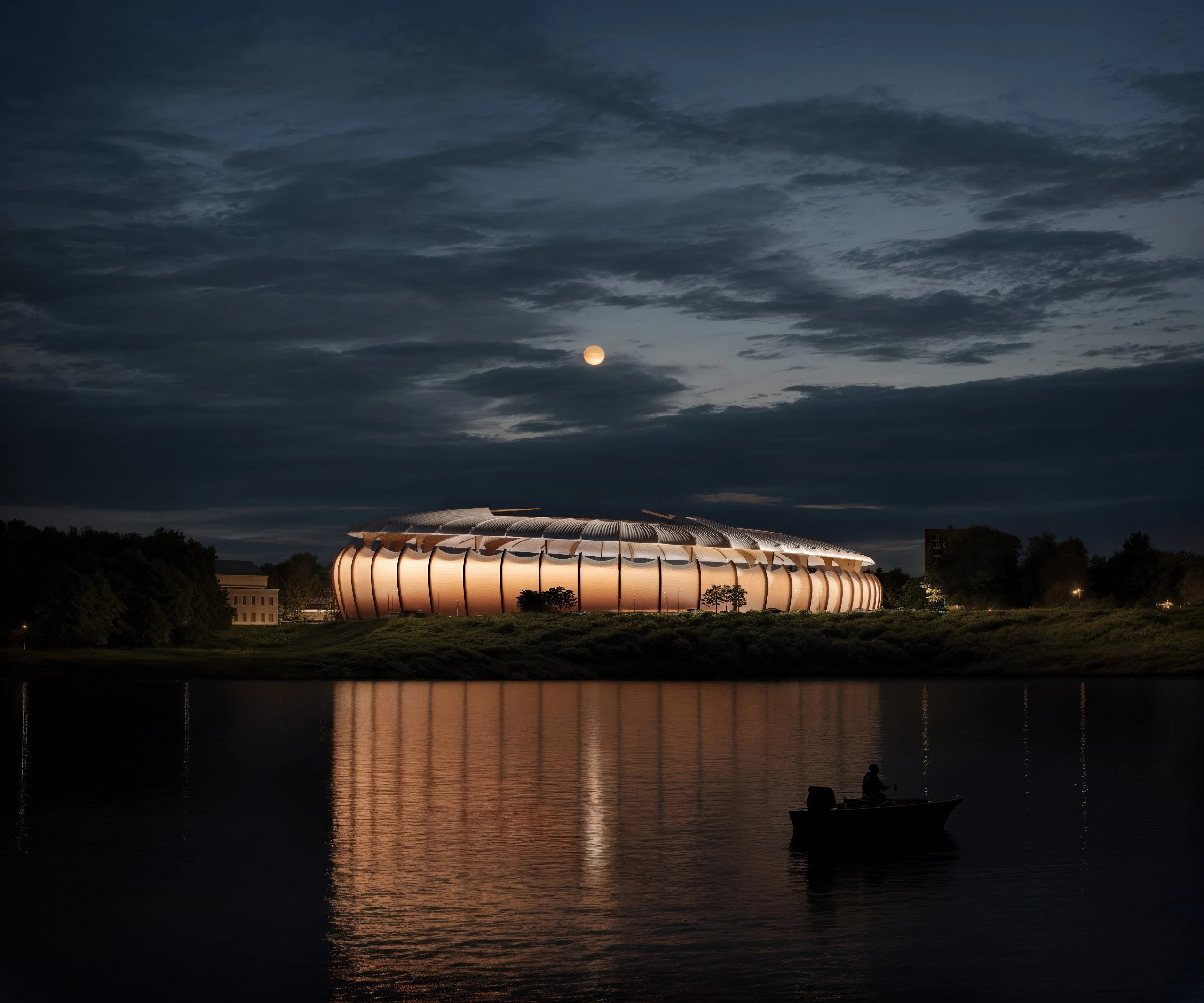
The project includes solar panels, rainwater collection for technical use, and natural air circulation systems that ensure the stadium bowl remains comfortable during events. Night lighting softly envelops the facade in a warm glow, emphasizing its plasticity while remaining delicate for the surrounding residential neighborhoods.
The Poetry of Form
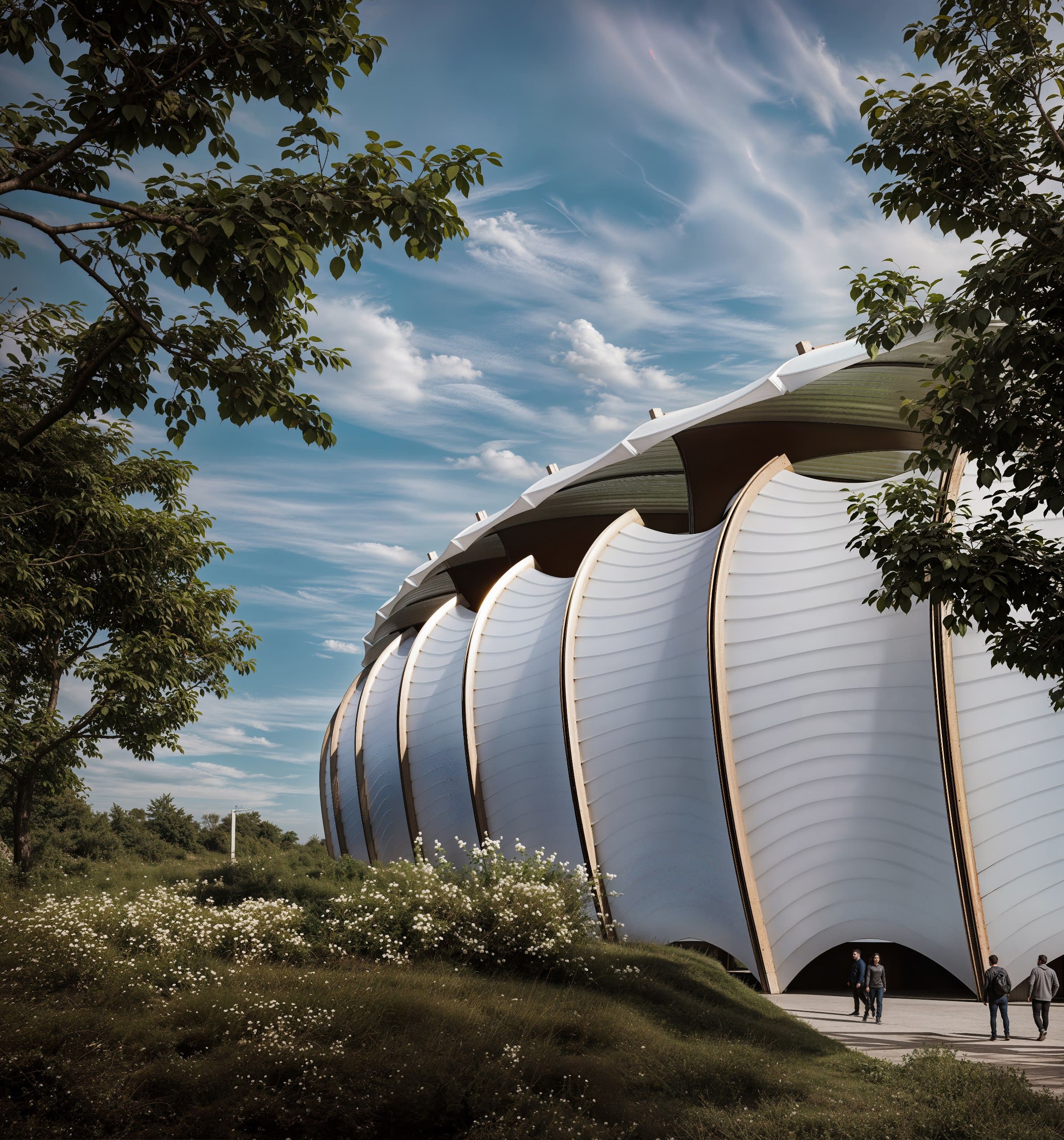
The perforated, curved facade panels resemble the fabric of Kochari dancers' costumes—light by day and softly glowing at night. The rhythm of the structure references the silhouette of Ararat, while the material texture connects the building to the Armenian landscape.
Conclusion
Azata Stadium is not just a sports facility; it is a new cultural landmark for the city. It is architecture that unites history, symbols, and modernity into an emotional and meaningful space.