FJORDS ZEN GARDEN ESCAPE
Year
2025
Location
Norway
Project type
Hospitality
Status
Concept
Team
Shamsudin Kerimov, Ekaterina Taskaeva, Alina Denisovich, Alexander Zhatov, Diana Kozyreva
Awards
The project received a Honourable Mention Larsen Architecture.

The project received a Honourable Mention Larsen Architecture.
Function and Composition
The "Rock Garden" Retreat is designed for visitors facing professional or personal burnout. Here, they can "hide" from their everyday lives and shift focus to self-exploration, seeking and understanding their true desires and goals. This journey can take weeks or months, and the complex's conditions and atmosphere are designed to stimulate this process.
In addition to the magnificent surrounding wilderness, the retreat offers a comprehensive program. This includes occupational therapy – tending the vegetable garden, eating organic produce from the estate, yoga and aroma-spa sessions, and art therapy. Regularly visiting specialists conduct psychological training, masterclasses in clownery and movement, as well as woodworking and local crafts.
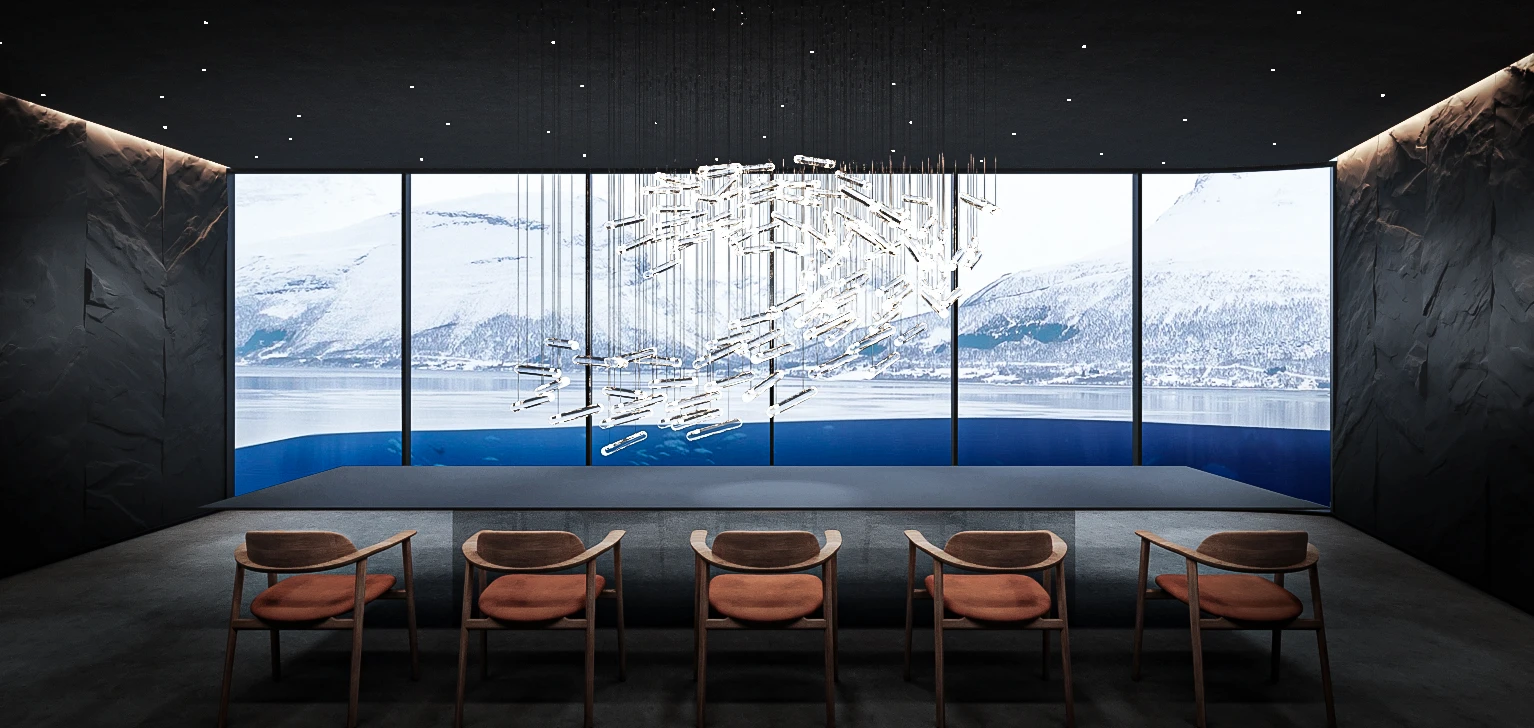
For this purpose, the complex features separate facilities: workshops, an auditorium with an amphitheater, a gym, a spa area with a panoramic hammam and an open-air herbal bath. There is also a restaurant with an open kitchen and a comfortable lounge with water views.
The retreat is situated right at the water's edge. It is carved into the rocky shore and faces the water with a long glass façade. A multi-level wooden terrace with ramps and an amphitheater-style staircase stretches along the water. The lower terrace is recessed below the water level; its glass railing allows observation of underwater life. Near the spa area, there are piers for safe access to the water, and a bit further – year-round sunbathing terraces protected by rocks from the north.
The roof of the main building is a natural Norwegian meadow, intersected by two open staircases allowing ascent from the pier up the steep slope. Green roofs also cover the staff residential block and the elevator shaft. One of the staircases leads to a symbolic observatory – a rotating platform divided into sector-boxes, surrounded by stones arranged according to the directions of the zodiac constellations.
The building's roof also serves as a viewing platform – on a raised cantilevered ledge – and an area for growing crops. Here begins the vegetable garden, which guests collectively tend. A greenhouse is also located here, accessible both from the outside and directly from the lounge and kitchen. Along the rear, darker contour of the building are storage rooms for the harvest, utility, and technical spaces.
Higher up the slope, there is a multifunctional area with a summer terrace, a kitchen for seasonal food preservation, a barbecue zone, and a utility block for garden tools and supplies. The area is surrounded by a common wooden canopy.
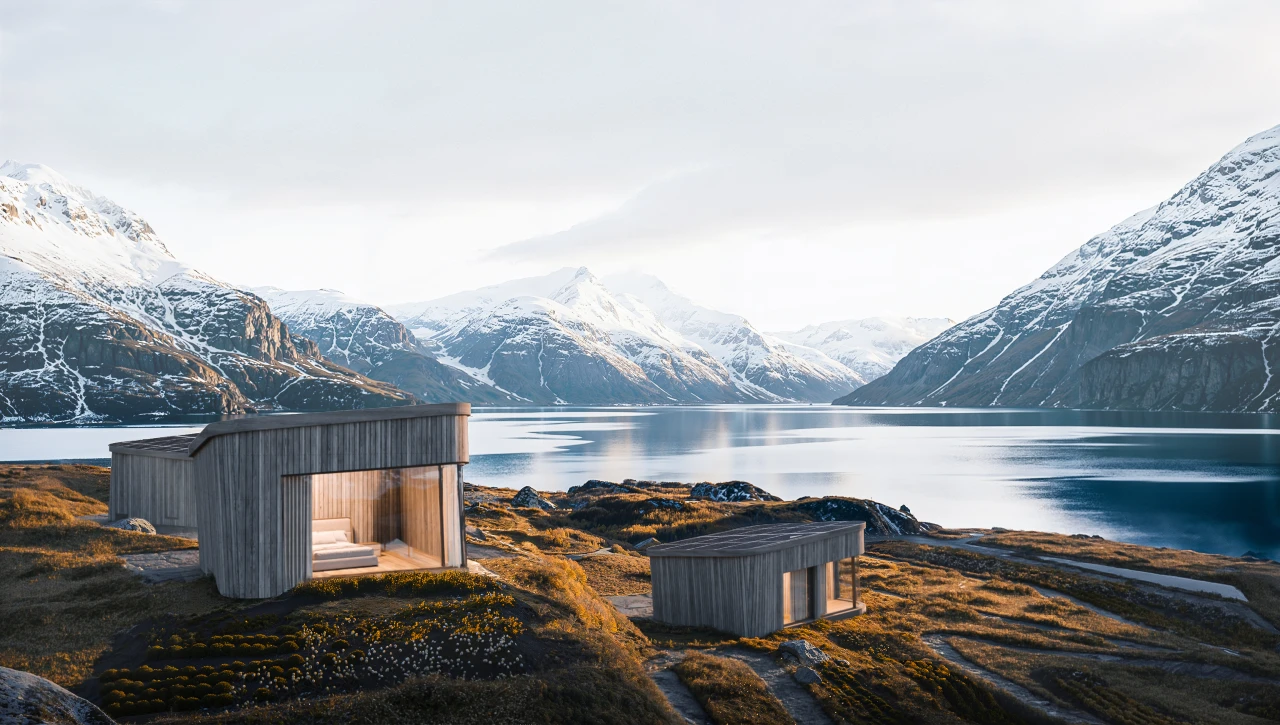
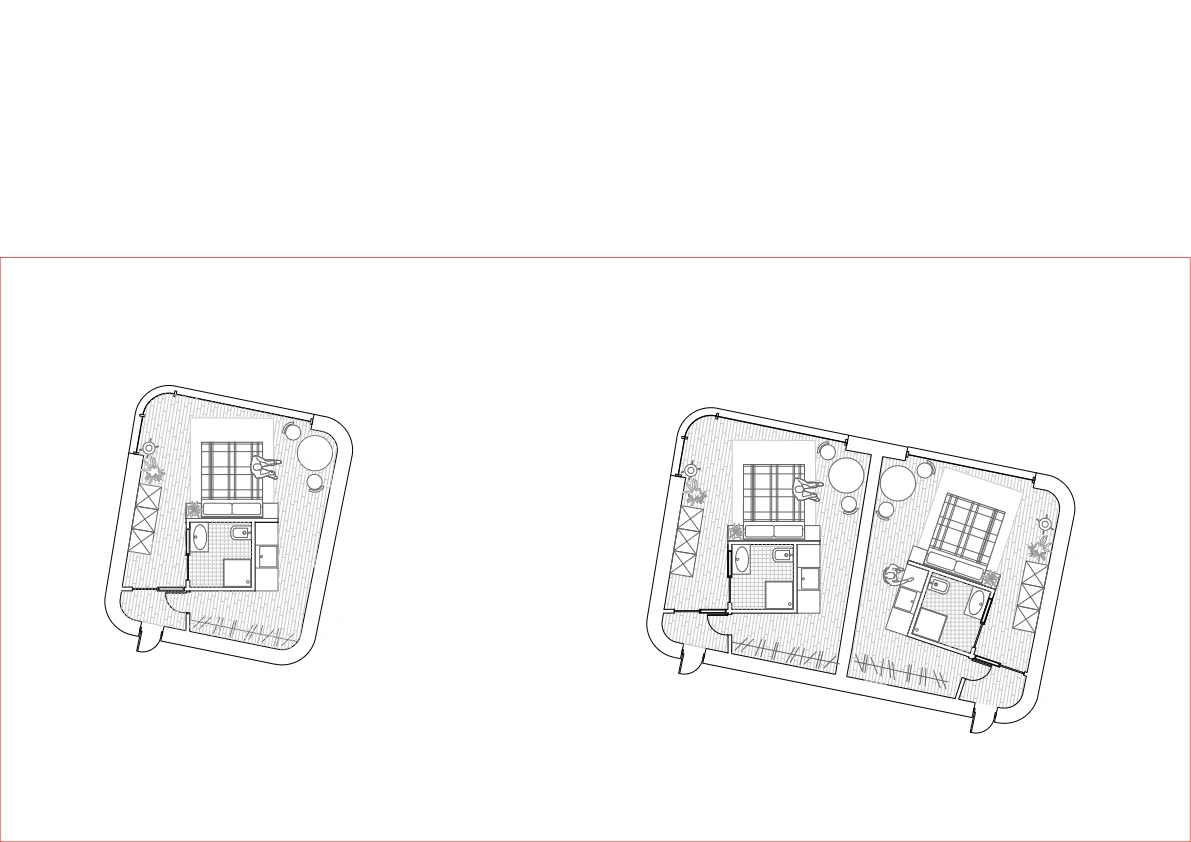
Guests stay in individual autonomous cabins equipped with all necessities: a bathroom with a shower, a mini-kitchen, a large double bed, and storage furniture. The cabins are scattered across the landscape like natural stones. Each adjoins its own small guest garden.
Ecology, Economy, Safety
The main building is oriented to the south and has no northern façade, which allows the complex to collect and retain a greater volume of solar heat.
The use of local wood and stone as finishing materials and energy-efficient glazing is planned. Slanted cabin roofs are equipped with solar panels. The complex's energy supply also utilizes a hydro-turbine installed on a nearby mountain river and geothermal heat pumps. For energy conservation, heat recovery systems for air and water, as well as super-insulation, are provided.
The entire project site is preliminarily surveyed for the presence of rare and valuable plant species, which are transplanted to new locations if necessary. Guest cabins are installed on natural stone foundations without deep excavation.
Rainwater is collected for irrigation; household wastewater is separated into grey and black water. Grey water is filtered and reused for technical purposes. Septic tank contents are disinfected and decomposed by anaerobic bacteria, later used as fertilizer. Kitchen organic waste is also processed in composters.
Most plant-based food is produced in the retreat's garden or foraged from the wild; fish is caught locally; animal products are supplied from nearby farms. Drinking water comes from local springs and mountain streams.
Guests with limited mobility can move around the complex via ramps and use the elevator.