Riverwave Residence
Area
7000 m²
Year
2024 - present
Project Type
Residence
Status
Concept
Team
Shamsudin Kerimov, Ekaterina Kudinova, Alexander Zhatov, Asel Ravilova
Awards
DESIGN DISCOVERY AWARDS (D&A) WINNERS
Winner of the Muse Design Awards – Platinum in 'Architecture' (2025)

DESIGN DISCOVERY AWARDS (D&A) winner and Platinum Muse Design Awards laureate in Architecture.
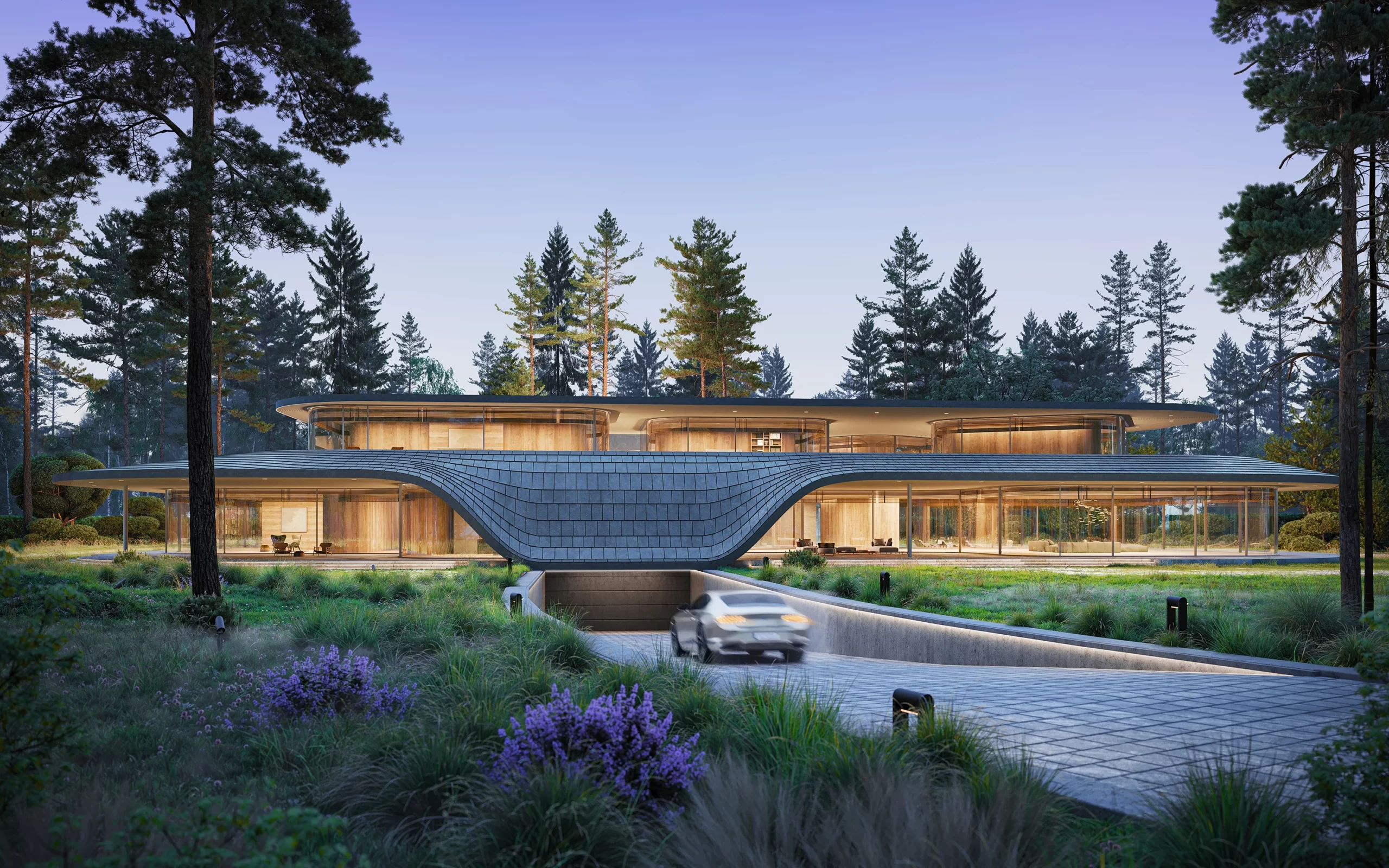
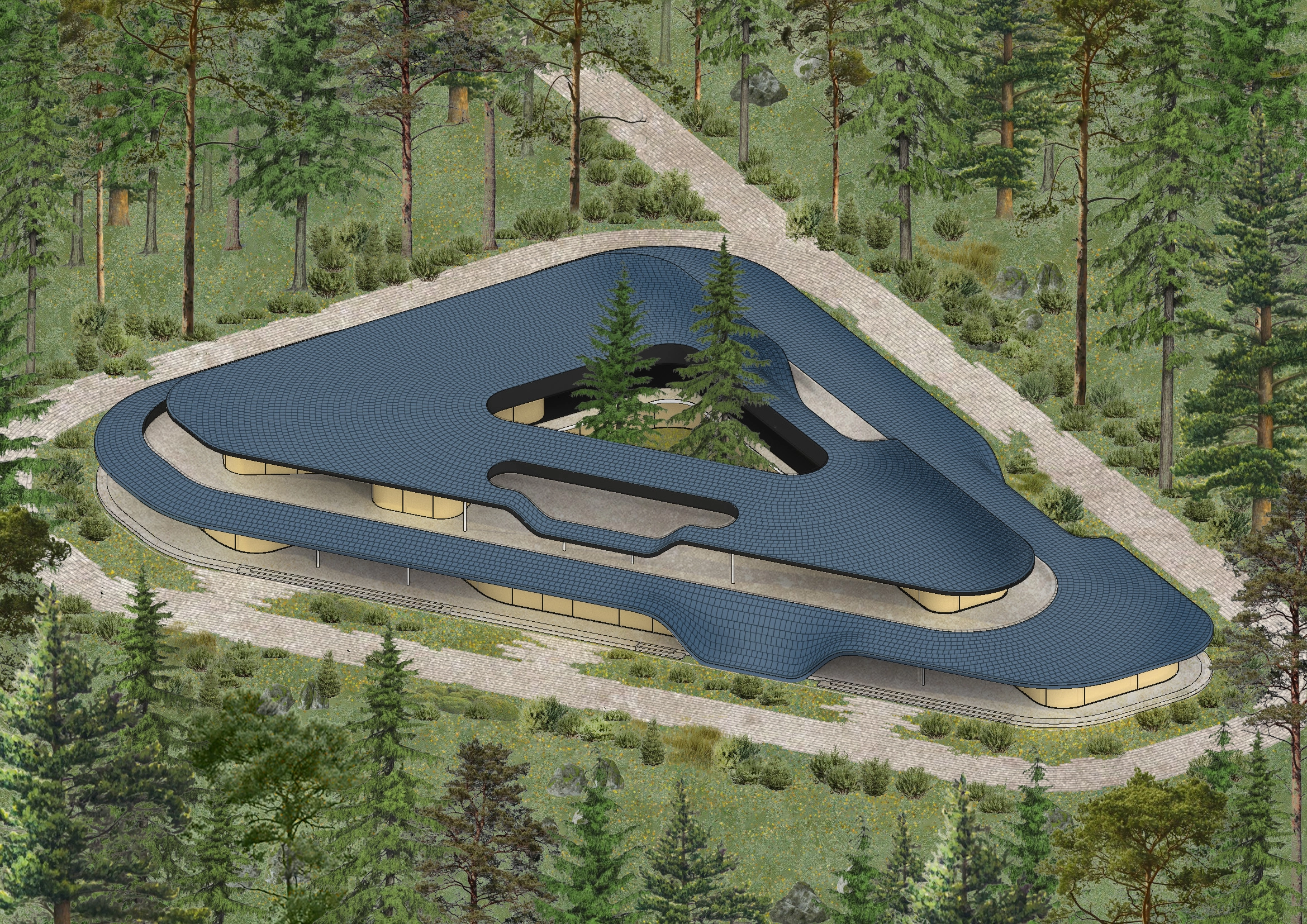
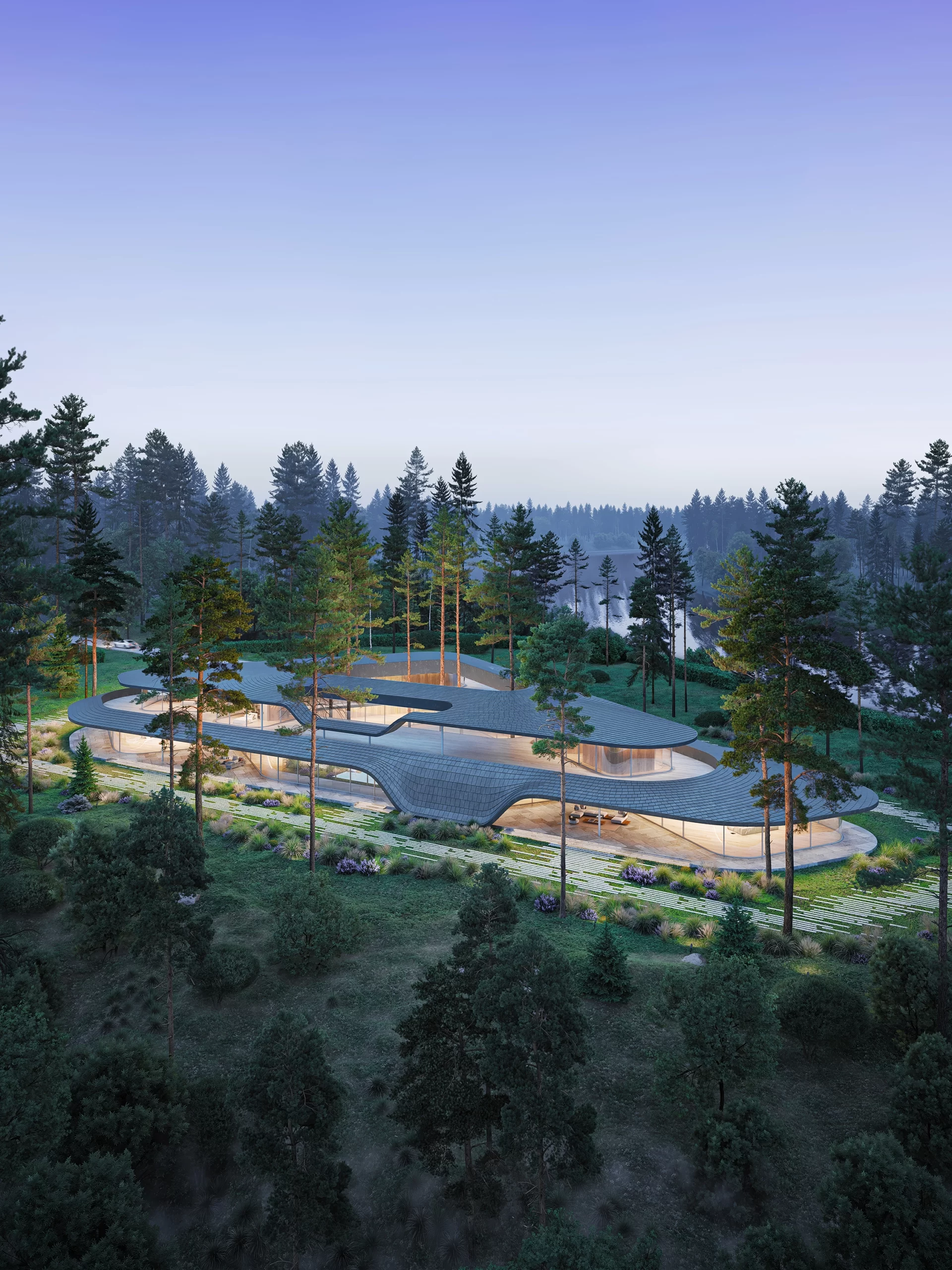
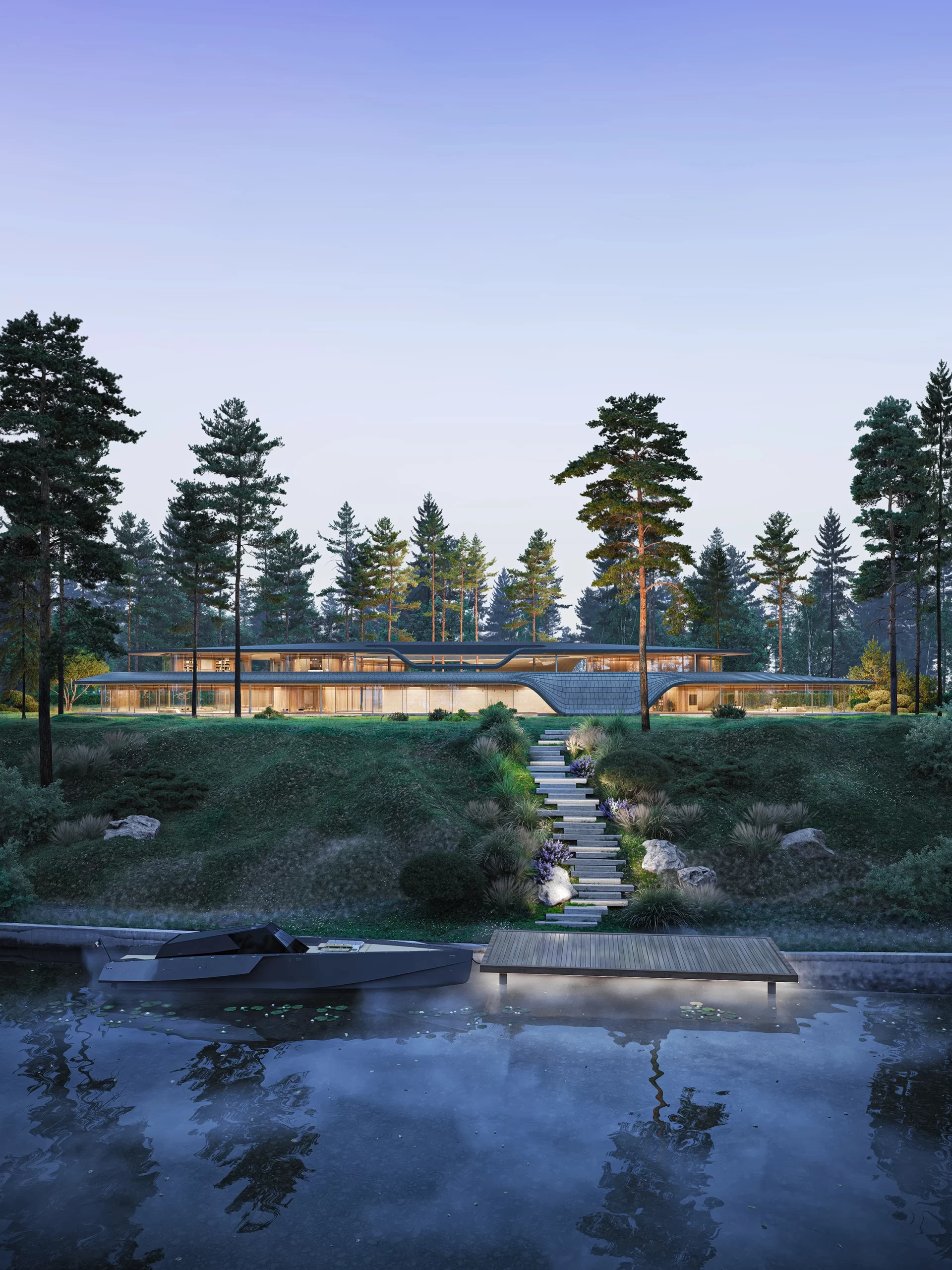
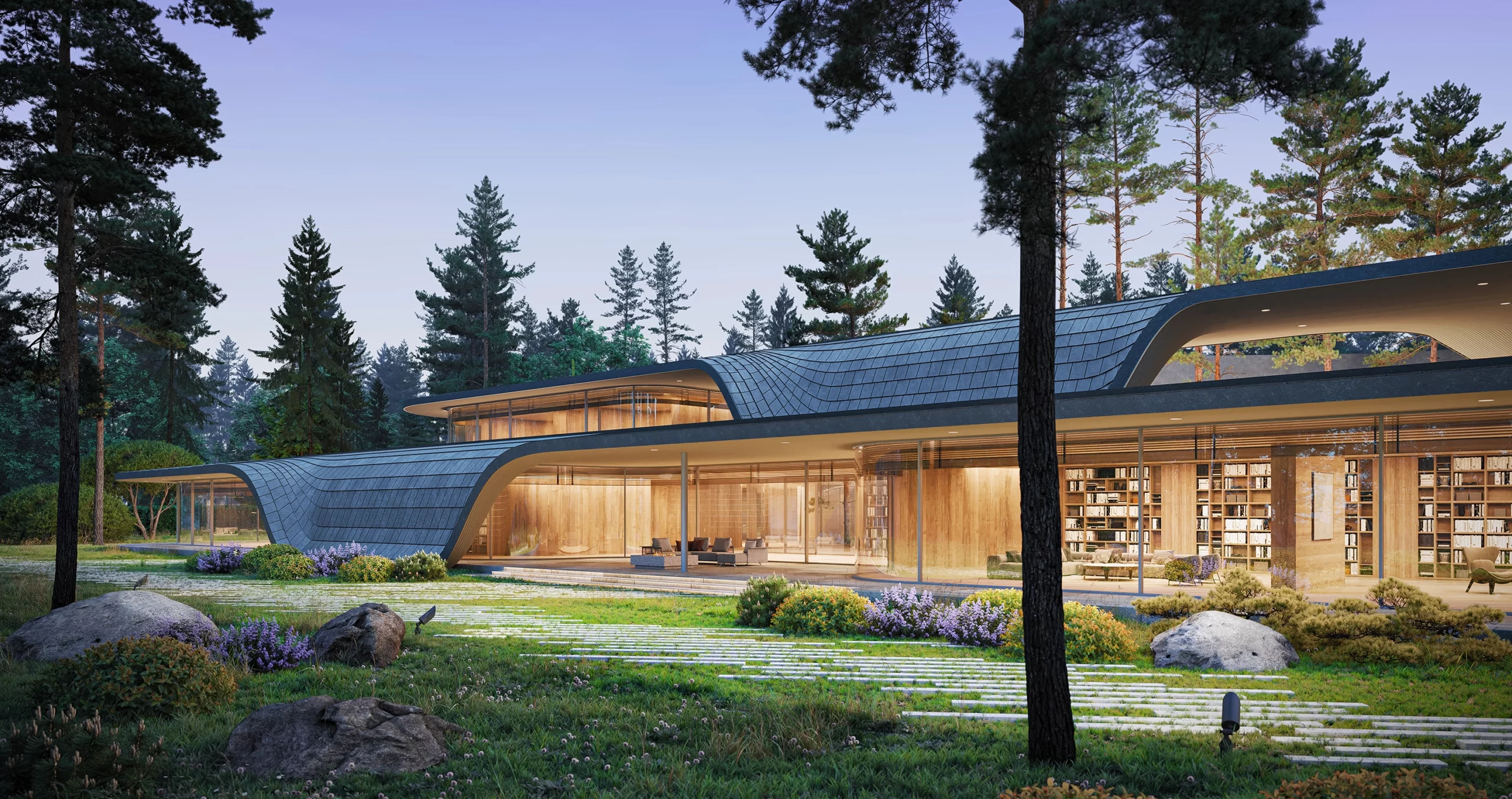
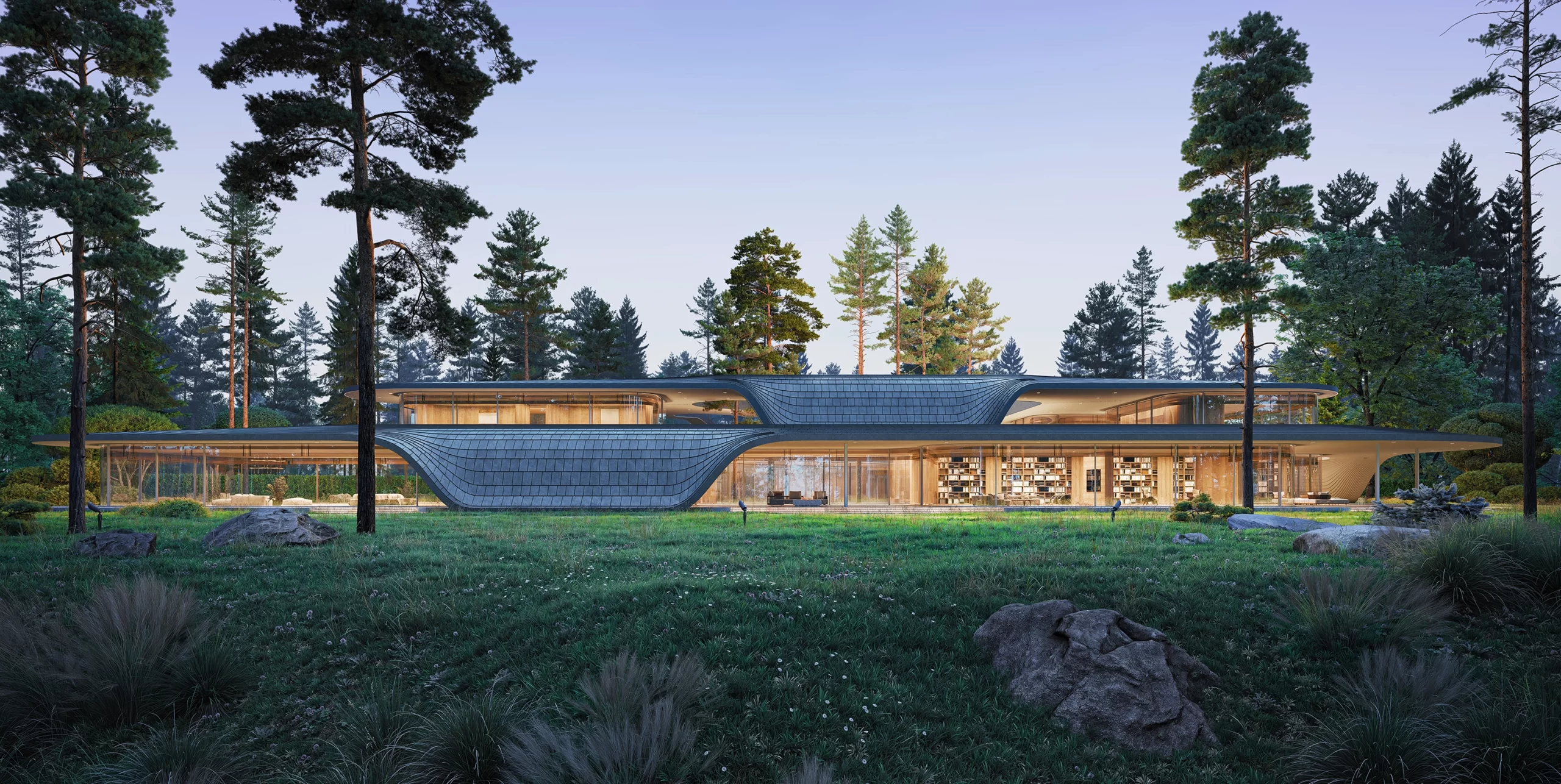
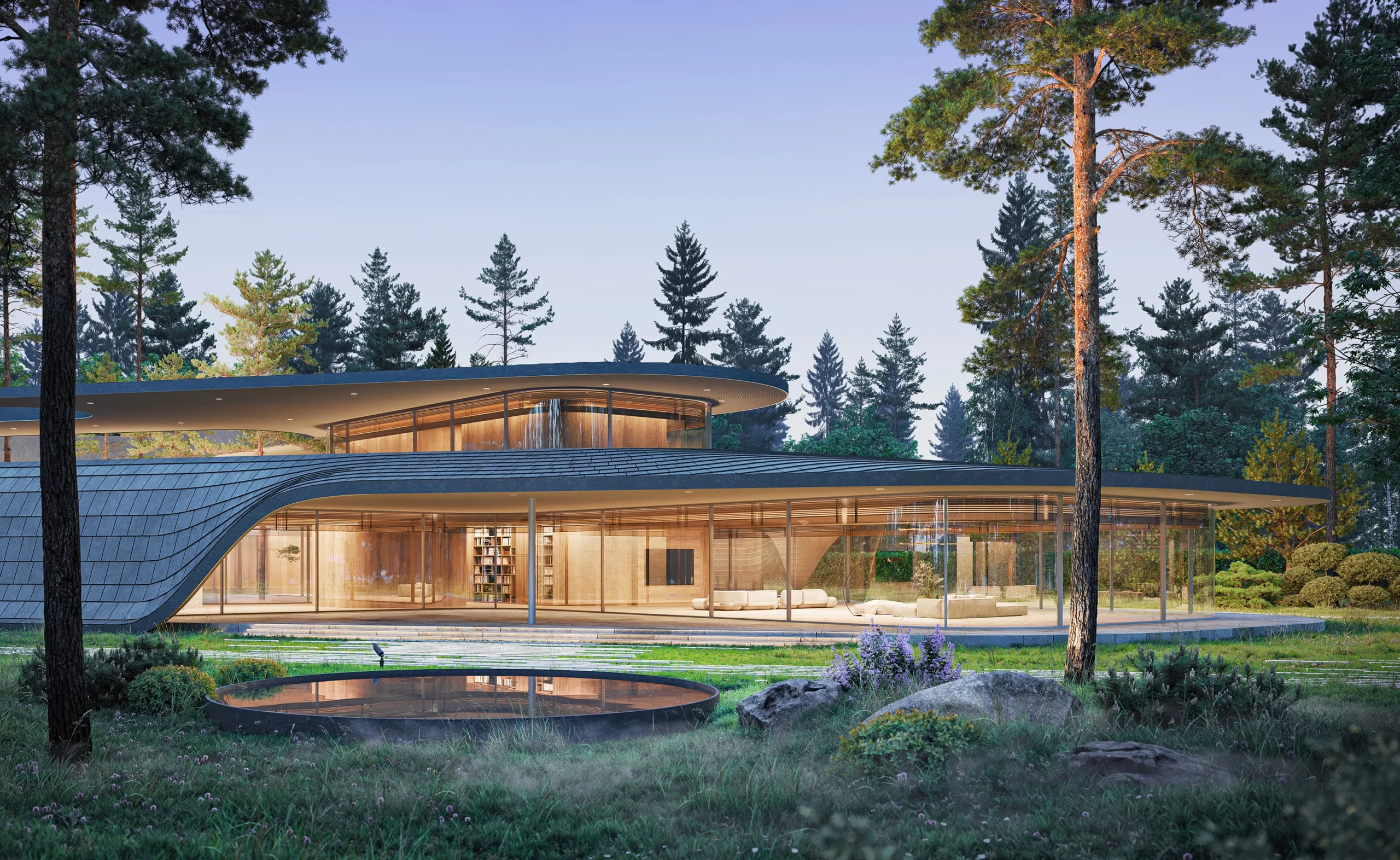
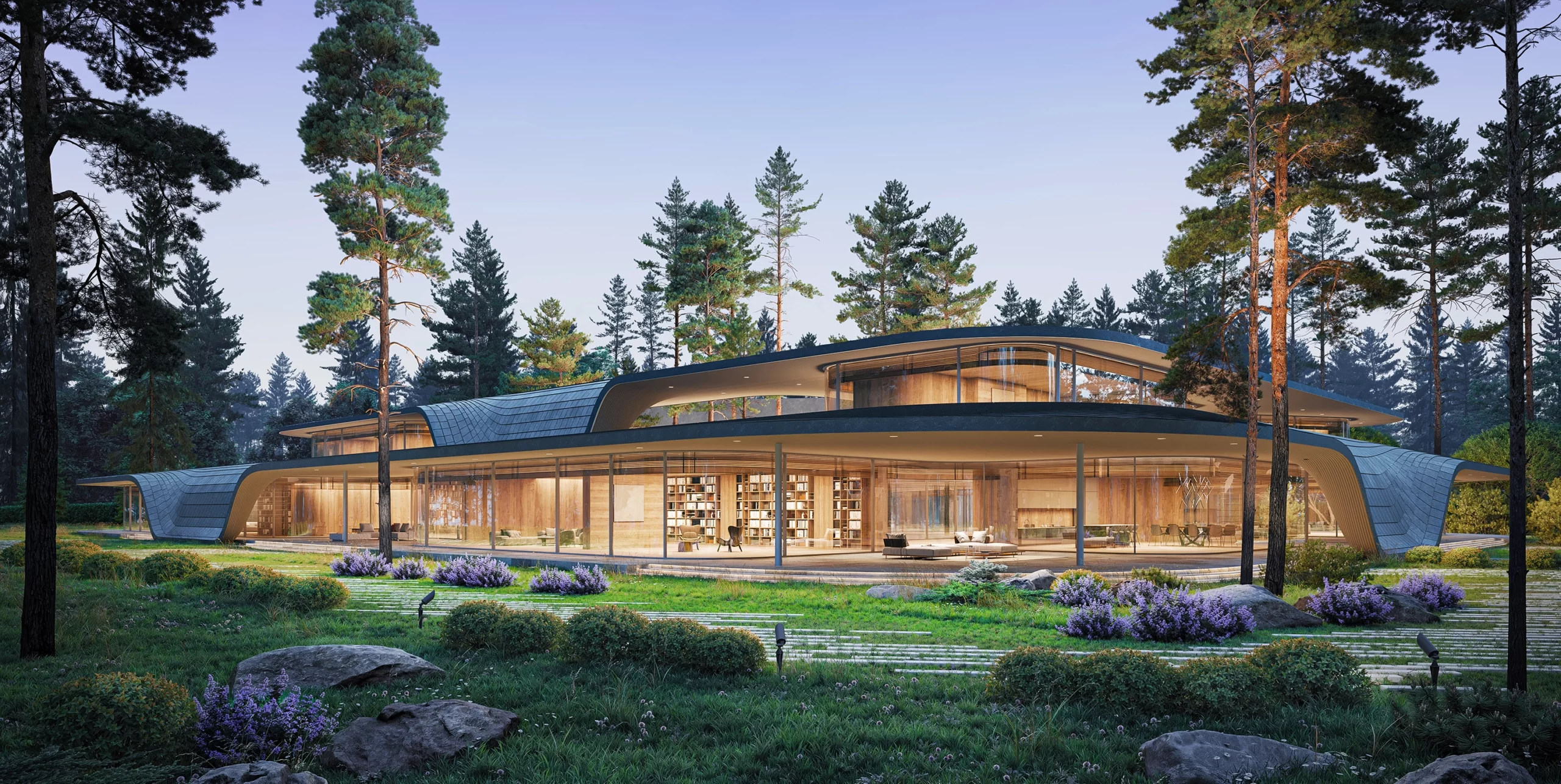
Riverwave begins with the movement of water. The residence occupies a forest plot bordered by a river on two sides, giving it the seclusion of an island. Rather than treating the river as a distant view, the project adopts its flow as an organising principle. Long, fluid lines follow the contours of the banks, drawing the natural order of the site into the architecture. More than a house, Riverwave proposes a way of living in which architecture and landscape are experienced as one continuous environment.
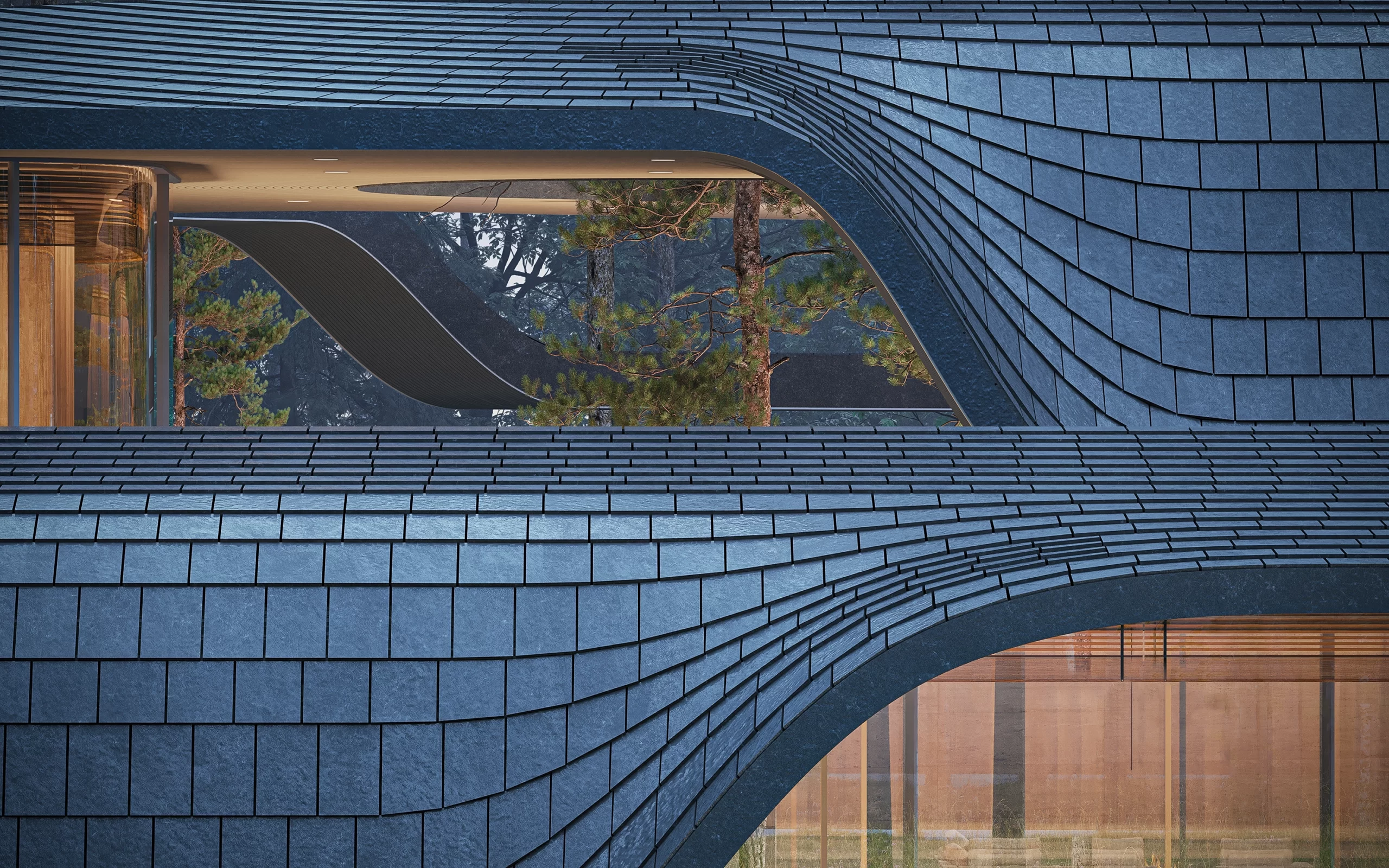
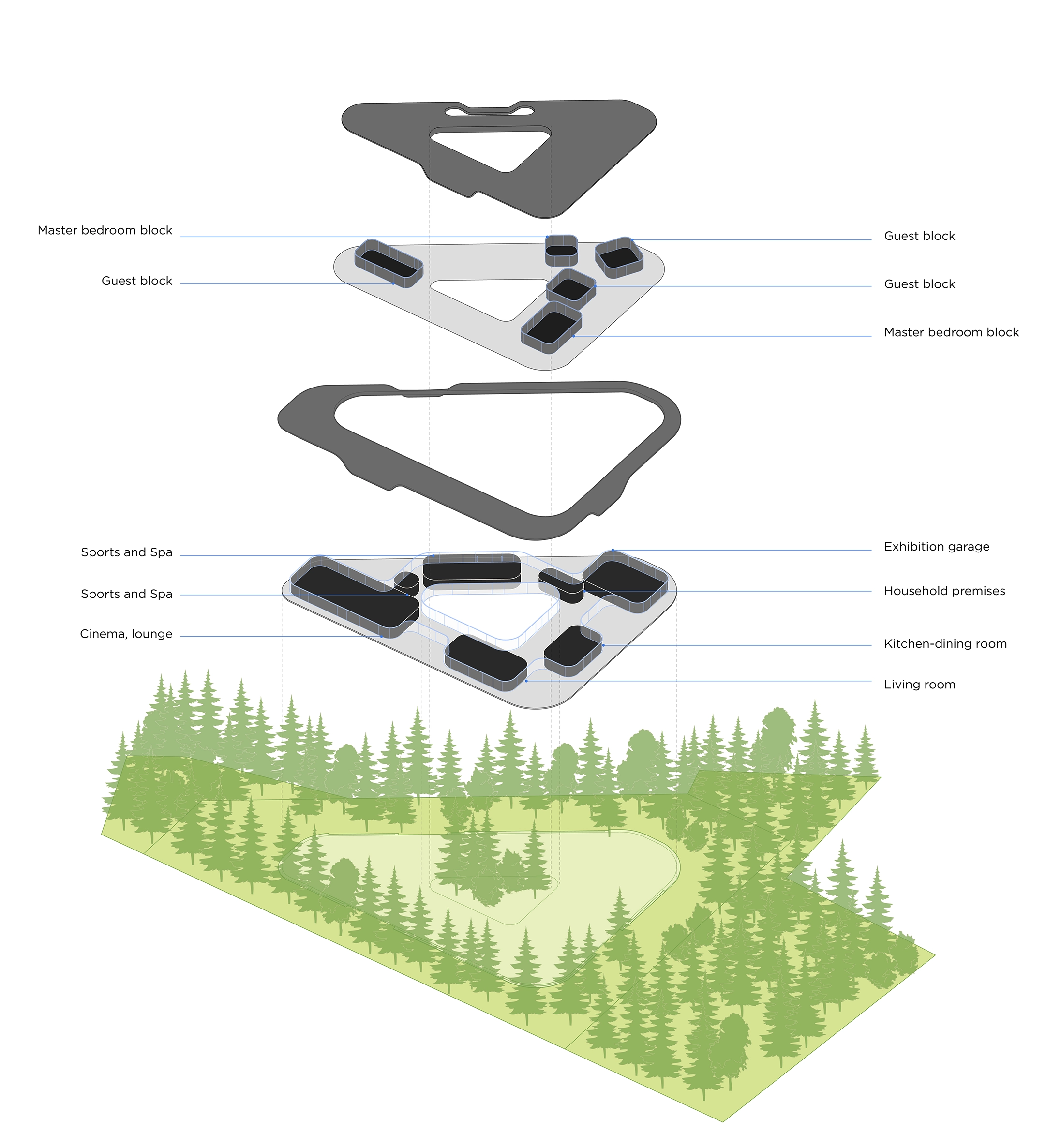
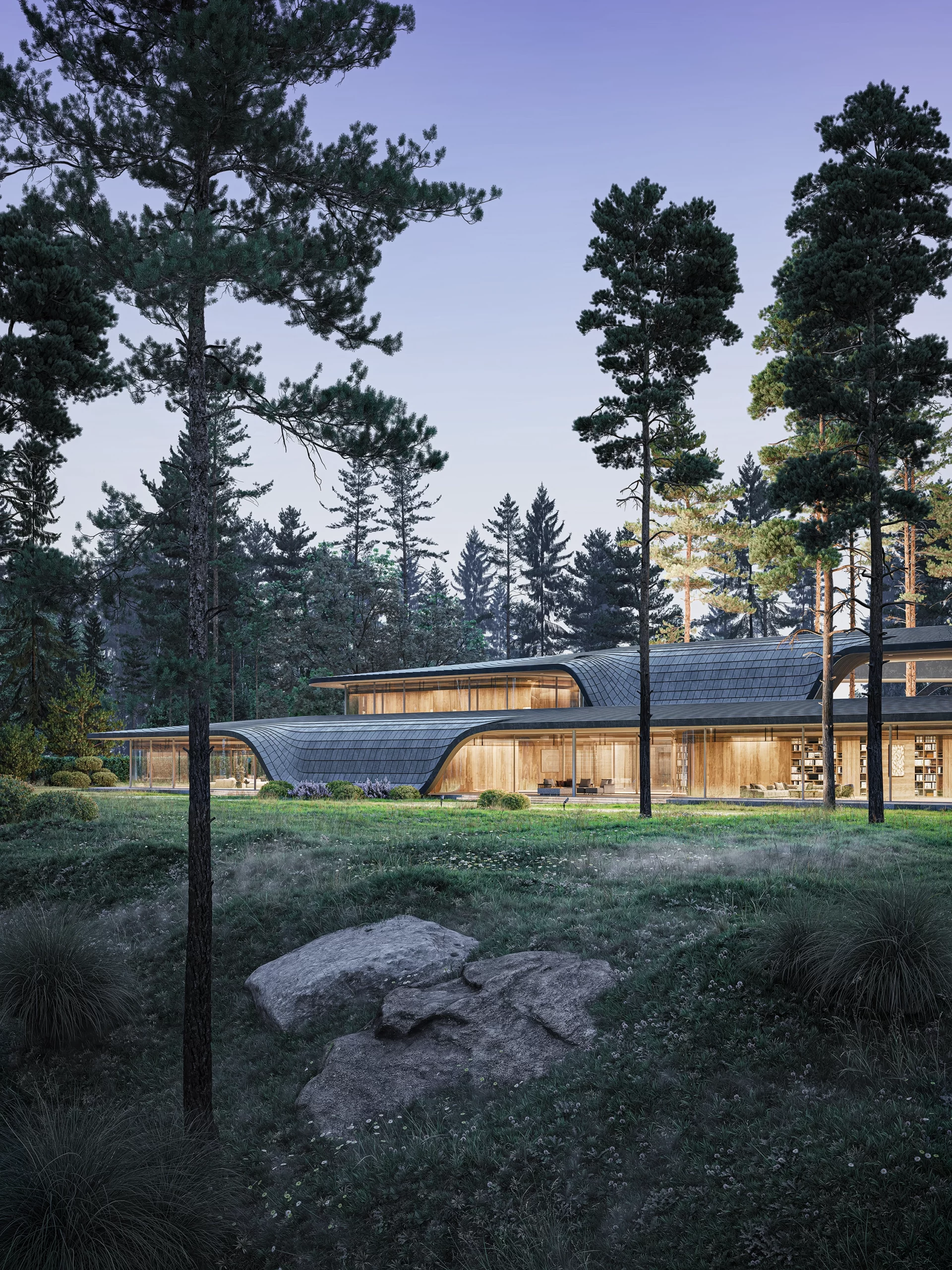
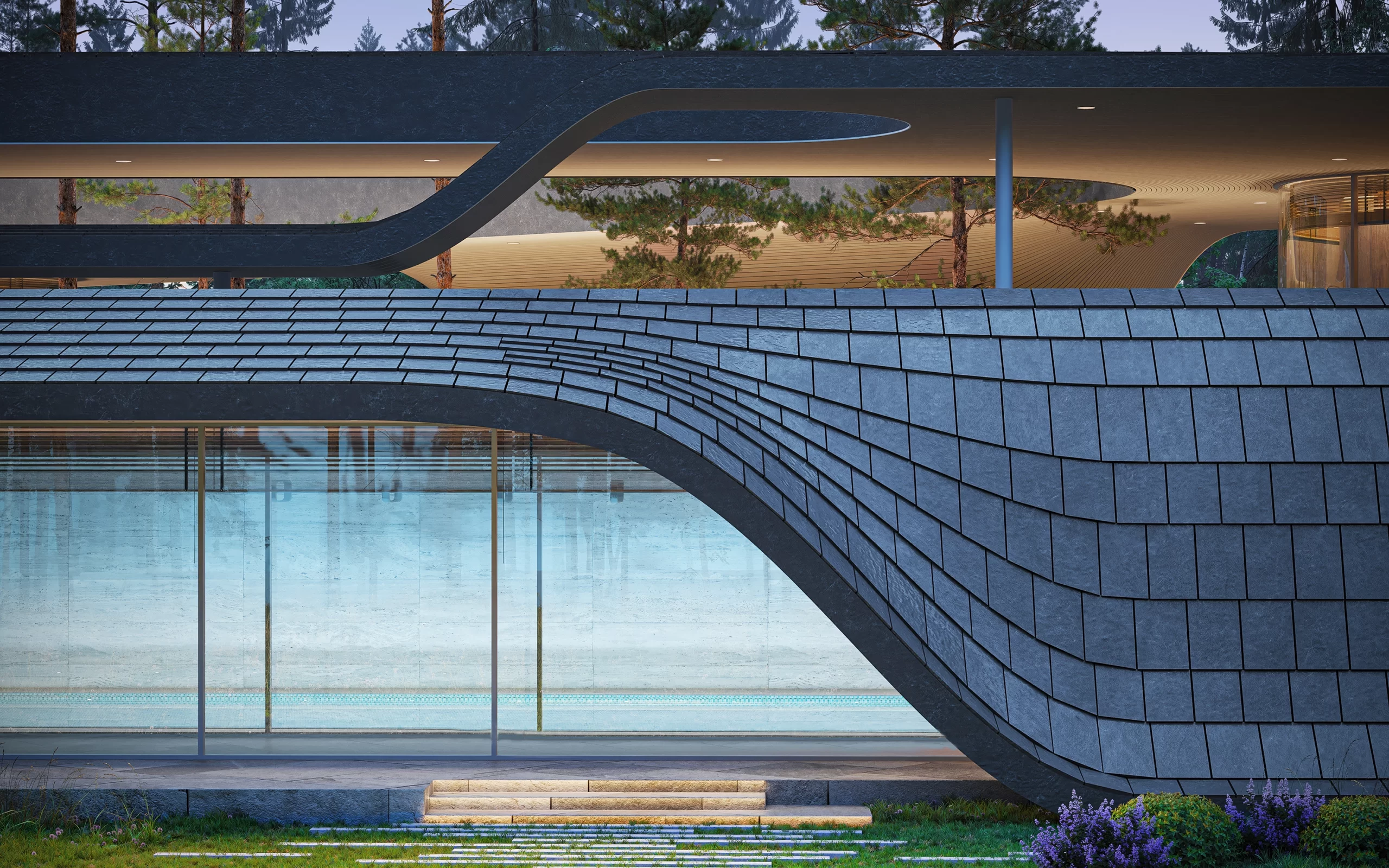
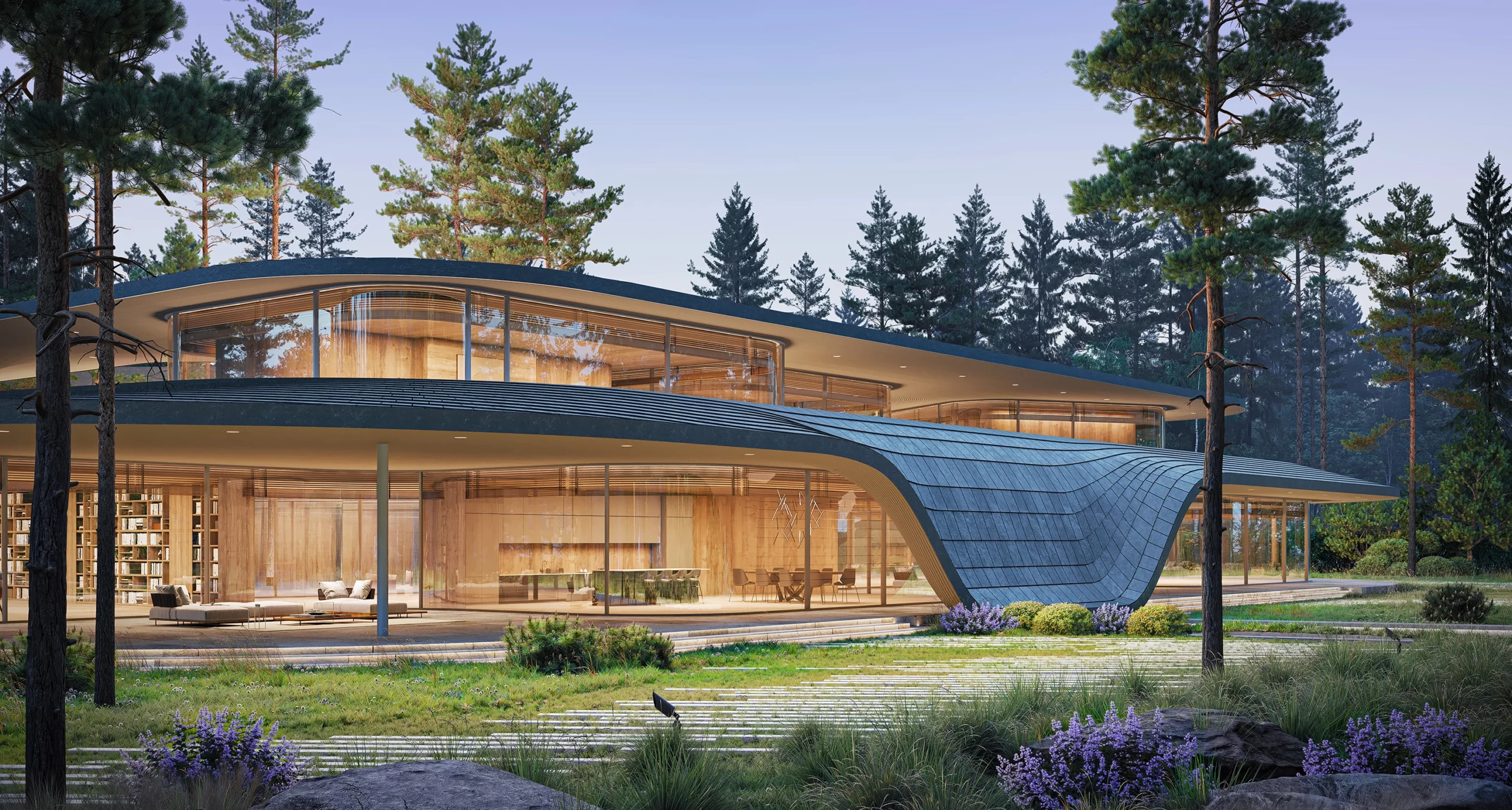
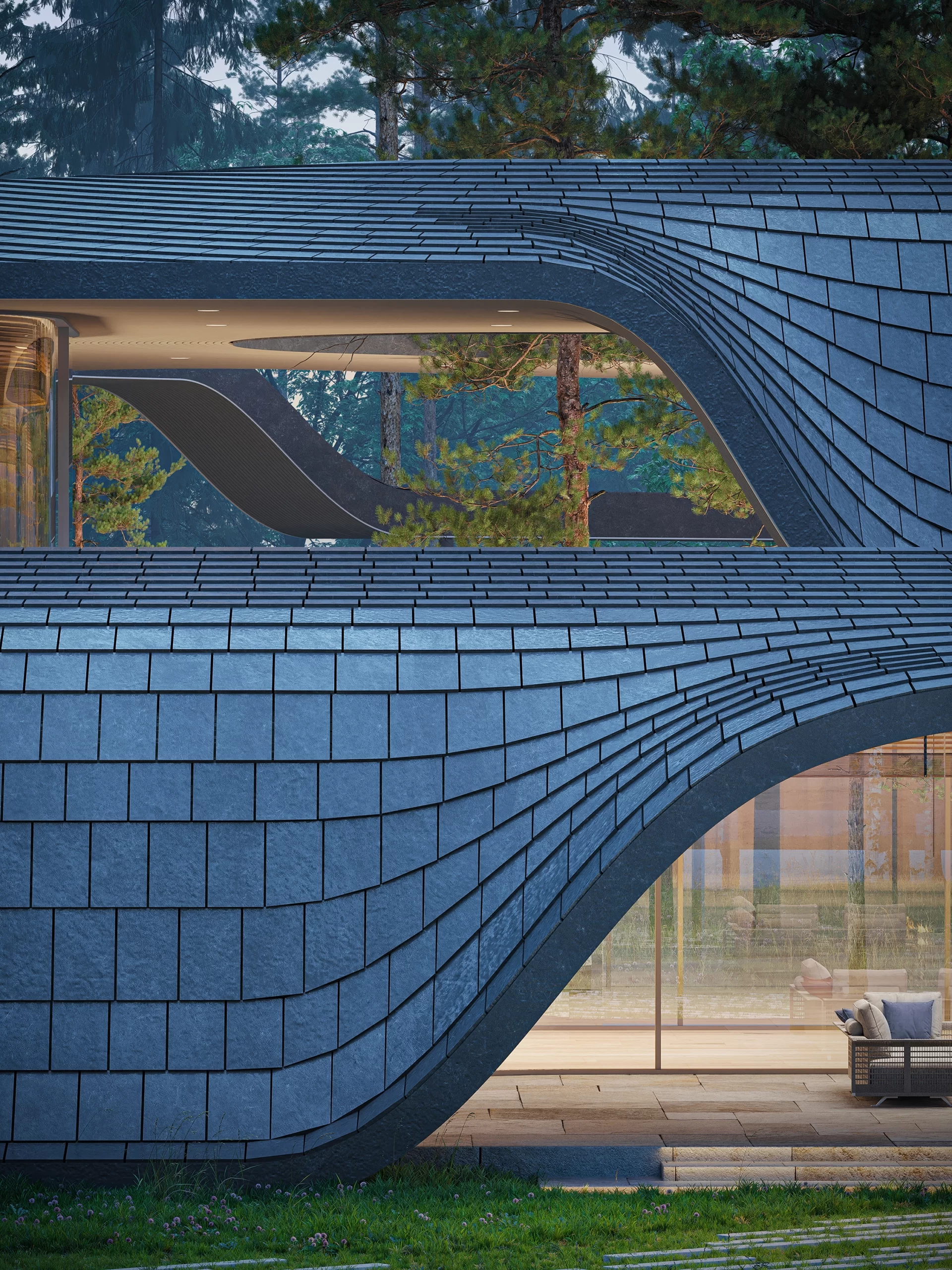
Rising, dipping, and folding across the building, the roof translates the rhythm of the river into architectural form. Every shift performs a precise spatial role. The roof lowers above bedrooms and bathrooms to provide privacy and shelter, then lifts over the shared spaces to admit daylight and open the interior towards the landscape. Its changing section guides the approach, frames views, and mediates between intimacy and openness.
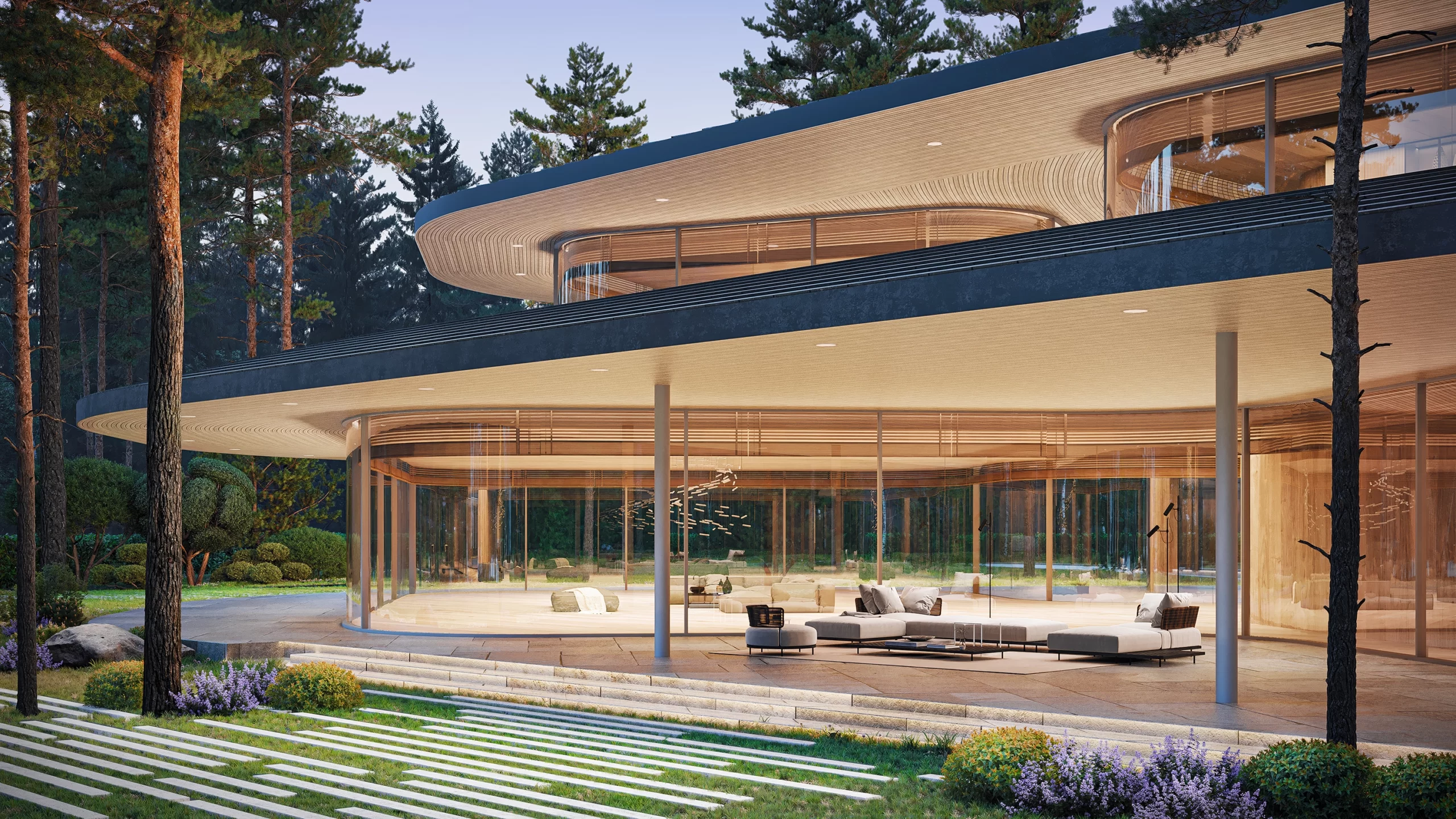
At the heart of the house, a central courtyard preserves a group of existing pine trees and serves as a key compositional element. The soul of the building is organised around them, protecting the established landscape while drawing it into the daily life of the residence. Panoramic glazing dissolves the visual boundary between inside and out, allowing the forest and river to be perceived as extensions of the interior while retaining a sense of shelter and privacy. The connection to nature is embedded in the organisation of the house itself. Changing daylight supports the inhabitants’ natural rhythms, while the constant presence of water and vegetation deepens their awareness of time, season, and place.
Dark slate gives the roof permanence and topographic weight, while transparent façades bring lightness and visual continuity to the interior. The low, horizontal silhouette moderates the apparent scale of the residence, allowing it to settle among the trees. Despite its size, the house is experienced not as a monumental object but as a sequence of sheltered rooms, courtyards, and framed encounters with the landscape.
At Riverwave every curve performs a task: protecting privacy, opening a view, or guiding movement. The residence embodies the bureau’s philosophy of creating architecture in which aesthetics are inseparable from function, environmental responsibility, and a deep engagement with context.